


1. The Real Reason Everyone’s Talking About CNC Swiss Machining
Let’s just say it upfront—cnc swiss machining isn’t some fancy trend that popped up in the last decade and suddenly took over. It’s been around, improving, grinding away (literally), shaping the backbone of modern precision manufacturing. Aerospace fastener suppliers know this better than anyone. When you’re dealing with flight-critical parts that can’t fail—ever—this machining method becomes less of a choice and more of a requirement.
Swiss machines handle tiny, complex, finicky parts like it’s nothing. Long, slender, high-precision components that other machines choke on? A Swiss machine just shrugs and keeps cutting.
2. Why Aerospace Fasteners Need This Level of Precision
Fasteners don’t look glamorous. They’re not the shiny hero in aerospace marketing brochures. But if one bolt fails at cruising altitude, the whole aircraft becomes a headline you don’t want to read. That’s why aerospace fastener suppliers obsess over tolerance, consistency, metallurgy, strength, fatigue resistance… all of it.
CNC Swiss machining hits those tolerances in a repeatable way. Over and over, thousands of times, like a machine that refuses to have a bad day. And that’s what the aerospace world demands.
3. The Stuff Swiss Machines Do That Regular CNC Just Can’t
People love lumping cnc swiss machining into the same category as standard CNC turning. They’re not the same beast. Not even close.
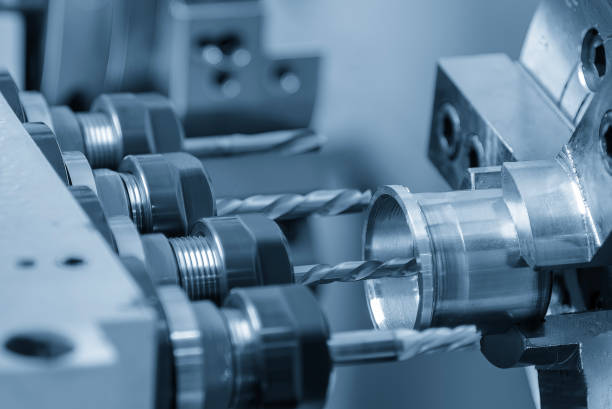
A Swiss-style lathe supports the stock right at the guide bushing, meaning almost zero deflection. No vibration nonsense. No sloppy micro-movements. The machine cuts the part inches from the support point, which lets you run crazy thin diameters without warping. Aerospace fastener suppliers rely on that when they need precise threads, undercuts, shoulders, or deep drill features.
Can other machines try? Sure. But Swiss machining nails it with repeatability that borders on obsessive.
4. The Materials Aerospace Actually Uses (Not What People Assume)
A lot of folks think aerospace fasteners are just stainless steel or titanium. That’s cute. In reality, aerospace fastener suppliers work with everything from Inconel to A286, Waspaloy, MP35N, 17-4PH, 7075-T73 aluminum, even nickel alloys that feel like cutting through stubborn rock.
Swiss machines handle these materials—especially the nasty ones—without flinching. The rigidity plus coolant-through tooling plus high-pressure systems makes a big difference.
If a supplier can’t cut exotic alloys cleanly, they’re out of the running before they even show up.
5. Why Swiss Machining Is So Freaking Good at Repetitive Perfection
Aerospace programs want long-term consistency. Programs stretch for years, even decades, meaning suppliers must maintain tolerances with no drift, no sudden quality personalities, nothing unexpected.
Swiss machining shines here. Once a program is dialed in, the machine runs like it has a memory—hit cycle start, parts come out the same. It’s almost boring. But boring is exactly what you want in aerospace fastener production. No surprises, no “Hmm, that dimension walked a bit,” no bad batches.
6. Prototype Today, Production Next Week—Yeah, Swiss Machines Do That
Speed matters. Aerospace companies aren’t famous for patience. When they need prototypes, it’s yesterday. And when they approve those prototypes, they want suppliers ready for scale.
CNC swiss machining helps by bridging that gap. A supplier can prototype a fastener design, tweak it, run a few dozen samples, then ramp into thousands—without switching platforms. No rewiring the whole manufacturing process. No wasted time.
That’s a huge advantage for aerospace fastener suppliers who want to move fast but stay precise.
7. Complexity Isn’t a Problem—It’s the Job
Aerospace parts are rarely simple. Even the tiny things. A fastener might have multiple features squeezed into a diameter you can barely see. Micro-threads, reliefs, grooves, tiny cross-holes, knurling—sometimes all on one part.
Swiss machining loves complexity. Multi-axis, multi-channel programming gives engineers insane control over tool paths. They can add features that older machines would laugh at (or cry at, depends how you look at it).
This opens the door to better fastener designs—lighter, stronger, smaller, more efficient.
8. The Aerospace Supply Chain Is Brutal. Swiss Machining Helps Suppliers Survive.
Let’s not pretend the aerospace industry is friendly. It’s demanding, it’s slow to approve, it’s quick to reject, and it punishes suppliers who aren’t prepared.
CNC swiss machining helps suppliers stay competitive because it reduces scrap rates, improves cycle times, and keeps tolerances airtight. When margins get squeezed—and they always do—efficient machining keeps suppliers alive.
You can’t survive aerospace without reliability. Swiss machining gives that reliability a backbone.
9. Fasteners Are the One Place You Don’t Cut Corners
In aerospace, people will argue about everything—materials, coatings, torque specs, inspection steps, you name it. But the one area where no one cuts corners is the hardware. Fasteners might make up 3% of an aircraft’s cost but hold together 100% of the structure.
So when aerospace fastener suppliers choose cnc swiss machining, they’re really choosing fewer risks. They’re choosing consistency across multi-year builds, across aircraft platforms, across every inspection cycle.
10. Long-Term Programs Need a Long-Term Machining Strategy
Airframes don’t vanish after two years. They stick around for decades. Spare parts continue even longer. So aerospace fastener suppliers must pick a machining method that holds up over time.
Swiss machining parts programmed ten years ago can still be run today with almost no changes (maybe some tooling updates). That kind of stability keeps production smooth and predictable.
Other machining methods get fussy or obsolete. Swiss stays relevant because it adapts—better controls, better live tooling, smarter monitoring—but the core precision doesn’t change.
11. Quality Control Doesn’t End at the Machine. It Starts There.
CNC swiss machining isn’t just about cutting metal. It’s a quality-control strategy in itself. Tighter cuts, less deflection, cleaner finishes mean fewer problems downstream.
Aerospace fastener suppliers still run the gauntlet of inspections—CMM checks, thread gauges, FAI documentation, PPAPs, certifications—but starting with high-quality machining means fewer surprises. And fewer surprises means fewer delays.
When you’re building parts for aircraft, “less drama” is a gift.
12. Why Allied Technologies International, Inc Is Built for This Work
Some shops say they can do aerospace. Few actually can. It’s not just about having machines. It’s about having discipline, process, and a borderline obsession with consistency.
Allied Technologies International, Inc fits that mold. With advanced cnc swiss machining capability and deep experience supplying precision aerospace fasteners, they’re set up for tight-tolerance, flight-critical parts.
If you need components that can’t fail—parts that need to meet aerospace specs without excuses—start your project with people who live and breathe precision manufacturing.
Visit Allied Technologies International, Inc to start.
FAQs About CNC Swiss Machining & Aerospace Fastener Suppliers
What makes cnc swiss machining ideal for aerospace fasteners?
It delivers ultra-tight tolerances, perfect repeatability, and stable cutting performance for small, complex parts that aerospace programs rely on.
Why are aerospace fastener suppliers so strict with tolerances?
Because a single fastener failure can compromise an aircraft. Zero mistakes. Zero risks.
Can Swiss machining handle exotic aerospace materials?
Yes. It cuts titanium, Inconel, stainless steels, nickel alloys, and more with impressive stability.
Is Swiss machining good for high-volume production?
Absolutely. It’s built for long, consistent runs where precision must stay rock-solid.
Do aerospace suppliers use Swiss machining for prototyping?
Yes—fast prototyping and fast scaling are major benefits.


