

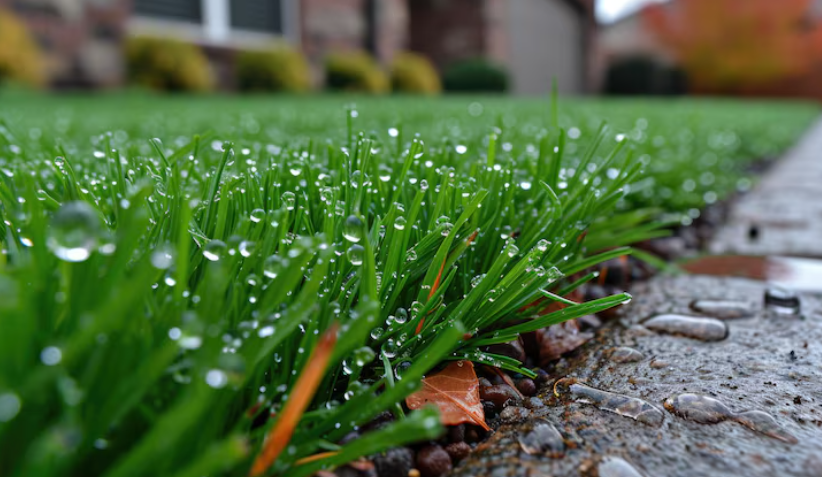
Density decides how a lawn looks and how it holds up, and it is the thing homeowners almost never think about directly. People talk about color, weeds, and bare patches, but all three trace back to how many grass plants are standing per square foot. Lawn aeration and overseeding is the pairing that raises that count, which is why it does more for a struggling yard than another season of fertilizer. Here is how density builds and why the results compound rather than arriving all at once.
What Density Actually Means in Turf
A healthy cool-season lawn carries roughly six to eight plants per square inch. A thin lawn might have two or three. That gap is not visible as bare dirt at first, which is why homeowners notice color problems before they notice the real issue.
Low density creates a chain reaction. Sunlight reaches soil between the plants, which is what weed seed needs to germinate. Exposed soil dries faster and heats up more, stressing the plants that remain. Those plants thin further and the decline accelerates.
Raising the plant count reverses the same chain. Grass shades its own soil, weed seed gets less light, moisture holds longer, and the turf becomes harder to displace.
The Hole Count Problem
Aeration is usually described as relieving compaction, which is accurate but incomplete. For density purposes, the holes matter because of what goes into them.
A walk-behind core aerator pulls plugs on fixed spacing, generally around six inches apart. Running the lawn once produces a grid set by the tine drum in one direction and the operator’s path in the other, and a good deal of ground in between never gets opened.
A second pass perpendicular to the first roughly doubles the count, which matters twice over. More holes mean more relieved compaction, and more holes mean a larger share of the seed lands somewhere it can germinate.
Seed falling onto thatch or hard soil mostly fails, drying out before rooting or washing into low spots. Seed falling into an open hole sits against moist soil on every side. The germination difference between those two situations is substantial, and hole count determines how much seed gets the better outcome.
Seeding Rates for Overseeding Versus New Lawns
Rates confuse people because the numbers for establishing a new lawn and for overseeding an existing one differ, and store shelves usually list the wrong one for the job.
Overseeding an established lawn calls for a lighter rate than seeding bare ground, since existing turf occupies much of the space. Homeowners underestimate anyway. Coverage for real density improvement runs heavier than most people assume, and a single bag across a quarter acre accomplishes very little.
Seed quality changes the math too. Bargain mixes carry filler and annual ryegrass, which looks good for one season and dies. Paying more per pound for perennial species produces plants still standing in year three, which is where density comes from.
How Species Choice Affects Density
Grasses build density two different ways, and a lawn benefits from having both.
Spreading Grasses
Kentucky bluegrass spreads through underground stems called rhizomes, sending up new plants away from the original crown. Bluegrass fills gaps on its own between seedings and keeps getting denser without additional seed. The tradeoff is patience, since germination takes fourteen to twenty-one days.
Fine fescues spread modestly and hold in shade where nothing else will, which makes them the answer under mature trees.
Bunch-Type Grasses
Tall fescue and perennial ryegrass grow in clumps that get thicker rather than wider. They do not migrate into bare spots, so density from these species comes entirely from how much seed went down.
What they offer instead is speed and durability. Ryegrass germinates in five to ten days and covers ground while slower species establish. Tall fescue roots deeply and handles heat, drought, and traffic better than bluegrass does.
A mix combines the spreading behavior of one group with the speed and stress tolerance of the other.
Why Density Compounds Year Over Year
One round of aeration and overseeding raises the plant count noticeably. Three consecutive rounds produce a different lawn, because each round starts from a better position than the last.
Year one adds plants to thin ground and opens compacted soil. Year two seeds into a lawn with better soil structure and existing root channels, so more of the seed survives. Year three seeds into turf already holding moisture and shading its own soil, which improves survival again.
Root depth follows the same pattern. Each aeration lets roots run further down, and deeper roots mean plants that survive the summers that used to thin the lawn.
Getting hole count and seed placement to work together is easier with equipment that handles both operations in a single pass, which some regional companies including Stateline LawnCare in Haverhill run as standard alongside two-direction coverage.
The equipment question is worth asking, because the alternative loses ground twice. Aerating on one visit and seeding on another means the holes have partly closed by the time seed arrives, and it means paying for two trips instead of one.
The Point Where Turf Crowds Out Weeds
There is a threshold worth aiming for. Once density passes a certain level, weed seed cannot get the light it needs to germinate and the lawn starts defending itself.
Reaching it changes the maintenance picture. Properties that needed several rounds of broadleaf control each season often drop to spot treatment, and crabgrass pressure falls because the soil is shaded. Savings on weed control across several years offset a real share of what the aeration and seeding cost.
Measuring Progress on Your Own Lawn
You can track this without equipment. Pick two or three spots, mark them, and photograph them from the same angle each September before the work happens.
Look at how much soil is visible between plants. Push a screwdriver into damp ground and note how far it goes before resistance. Cut a small plug three inches deep and check how far roots run down rather than sideways.
Those three measurements taken annually tell you more about the program than any single season’s appearance does.