

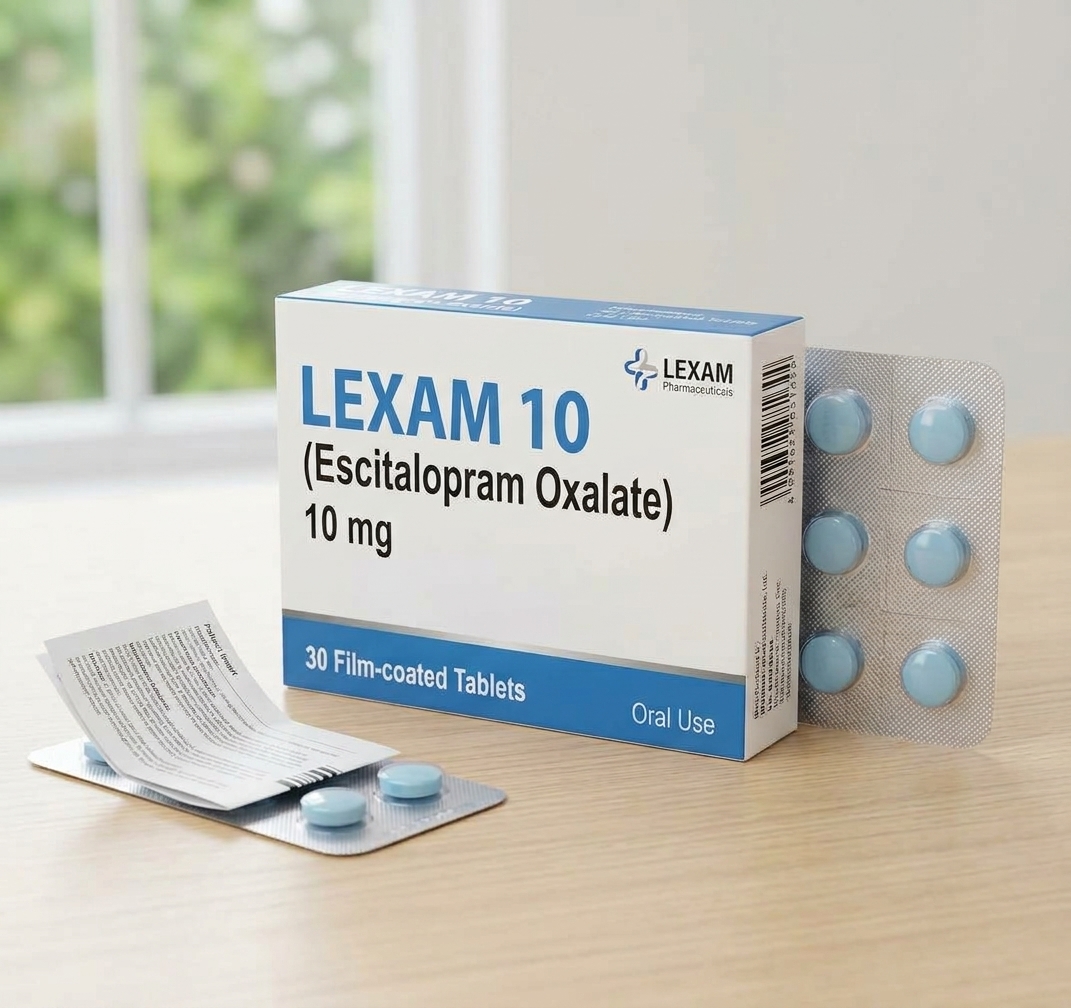
Lexam 10 is a prescription medicine that contains 10 mg of escitalopram, which is in the form of escitalopram oxalate.It belongs to a group of medicines called selective serotonin reuptake inhibitors (SSRIs) and is commonly used in Australia and around the world to help with major depressive disorder (MDD), generalized anxiety disorder (GAD), panic disorder, and social anxiety disorder.
Understanding how this medicine works, what side effects it may cause, how it interacts with other medicines, and what precautions should be taken can help patients get the most benefit from treatment and reduce the risk of harm.
This guide gives a clear summary of Lexam 10, explaining what it is used for, how it should be taken, what side effects might happen, and important safety information.
What Is Lexam 10 and How Does It Work?
Lexam contains escitalopram oxalate, which is one part of the medicine citalopram.
It works by stopping the brain from taking back too much serotonin, a chemical that helps control mood and feelings.By keeping more serotonin in the brain, Lexam helps improve communication between brain cells, which can reduce feelings of sadness and anxiety and help with emotional control.
Main Uses of Lexam 10
– Major Depressive Disorder (MDD): To treat periods of feeling very low and to help prevent future episodes.
– Generalized Anxiety Disorder (GAD): To ease feelings of worry and physical symptoms of anxiety.
– Panic Disorder: To manage sudden and repeated feelings of fear or panic, sometimes with a fear of places or situations.
– Social Anxiety Disorder (Social Phobia): To reduce fear and avoidance when in social or performance situations.
– Obsessive-Compulsive Disorder (OCD): To help control unwanted thoughts and repetitive behaviors over time.
Important Safety Tips and Considerations
Although escitalopram is usually better tolerated than older antidepressants, there are some important things to know.
1.
Withdrawal Symptoms
Stopping Lexam suddenly can cause uncomfortable side effects.
Signs may include:
– Feeling dizzy or lightheaded
– Strange sensations, like “brain zaps” or shock-like feelings
– Shaking, being easily upset, and having trouble sleeping
– Feeling sick or having a headache
It is important not to stop taking Lexam all at once.
Instead, it should be reduced gradually under a doctor’s care to avoid these effects.
2.
Serotonin Syndrome
This is a serious but rare condition that happens when there is too much serotonin in the body.
It can be life-threatening.It can happen if Lexam is taken with other medicines that affect serotonin, such as:
– MAOIs (a type of older antidepressant)
– Triptans (used for headaches)
– Pain medicines like tramadol or pethidine
– St.
John’s Wort (a herbal medicine)
– Recreational drugs like MDMA or stimulants
Symptoms of serotonin syndrome may include:
– High temperature
– Feeling very agitated or confused
– Fast heartbeat
– Stiff muscles, shaking, and heavy sweating
– If these happen, seek emergency help immediately.
3.
Increased Risk of Bleeding
SSRIs like Lexam can affect the blood’s ability to clot, especially when taken with certain other medicines.
This increases the risk of serious bleeding in the stomach or intestines.Medicines that can cause this include:
– Pain relievers like ibuprofen or naproxen
– Aspirin
– Blood-thinning medicines like warfarin or apixaban
Key Summary of Lexam 10
– Medicine Type: Selective Serotonin Reuptake Inhibitor (SSRI)
– Active Ingredient: Escitalopram (as oxalate) 10 mg
– Standard Adult Dose: 10 mg once a day (can be adjusted between 5 mg and 20 mg depending on how the patient responds)
– Time to See Effects: It may take 2 to 4 weeks to feel better, and it may take up to 6 to 8 weeks to get full benefits
– Common Side Effects: Feeling sick, trouble sleeping or drowsy, dry mouth, increased sweating.
– Important Risks: Serotonin syndrome, heart rhythm problems at higher doses, and increased bleeding when taken with NSAIDs or blood thinners
Common vs.
Serious Side Effects
Like all medicines, Lexam can cause some side effects, but not all patients will experience them.
Common and Usually Mild Side Effects:
– Stomach issues: Mild nausea, diarrhea, constipation, or dry mouth (these often improve within a few weeks)
– Sleep changes: Difficulty sleeping or feeling sleepy during the day
– Body changes: Slight changes in appetite or weight
– Feelings: Dizziness, mild shaking, or tiredness
These effects should be discussed with a doctor, as they can sometimes be managed by adjusting the dose or using other treatment methods.
Serious Symptoms That Need Immediate Medical Attention:
– Unexplained muscle stiffness, severe agitation, or confusion
– Signs of an allergic reaction, such as swelling of the face, lips, tongue, or a severe skin rash
– Abnormally fast or irregular heartbeat
– Vomiting that doesn’t stop, or dark, tarry stools
When looking at prescription rules or checking official safety information about certain medicines, checking clinical summaries like the Lexam 10 escitalopram medicine alert can help you check the right dosage, what’s in the medicine, and any important warnings from the government.
How to Take Lexam 10 Safely?
Take Lexam 10 the same way every day, either in the morning or evening, and try to take it at the same time each day.
You can take it with or without food.
Be patient: antidepressants often take 2 to 4 weeks before you feel better.
Don’t stop the medicine just because you don’t feel better right away.
Avoid alcohol: drinking alcohol while on Lexam 10 can make you feel more tired, slower, and it might not work as well.
Watch for mood changes: when you first start taking Lexam or change the dose, especially if you’re under 25, your family and doctor should watch for any strange behavior, increased anxiety, or thoughts of self-harm.
Frequently Asked Questions
What should I do if I miss a dose of Lexam 10?
If you forget to take a dose, take it as soon as you remember, but don’t take it if it’s almost time for your next dose.
Don’t take two doses to make up for a missed one.
Can Lexam 10 be taken during pregnancy or breastfeeding?
Using SSRIs like Lexam 10 while pregnant or nursing should be decided carefully with your doctor.
Small amounts of escitalopram can pass into breast milk, and use near the end of pregnancy might cause some issues in the baby, like temporary withdrawal or breathing problems.Still, not treating depression can also be dangerous for the mother and baby.
How is escitalopram different from citalopram?
Escitalopram only contains the active form of citalopram.
Because of this, 10 mg of escitalopram is about as strong as 20 mg of citalopram.This can lead to better effects at the serotonin transporter and fewer side effects on other parts of the brain.
Does Lexam cause weight gain?
Some people might gain a little weight while on Lexam over time.
This could be due to improved appetite as depression improves or small changes in metabolism.Eating well and staying active can help keep your weight in check.
Summary
Lexam 10 (escitalopram oxalate 10 mg) is a commonly used SSRI for treating depression and anxiety.
It works best when taken daily as directed, you are aware of possible drug interactions, and you keep in touch with your doctor.If you feel strange side effects or think you need a different dose, always talk to your healthcare provider.


