

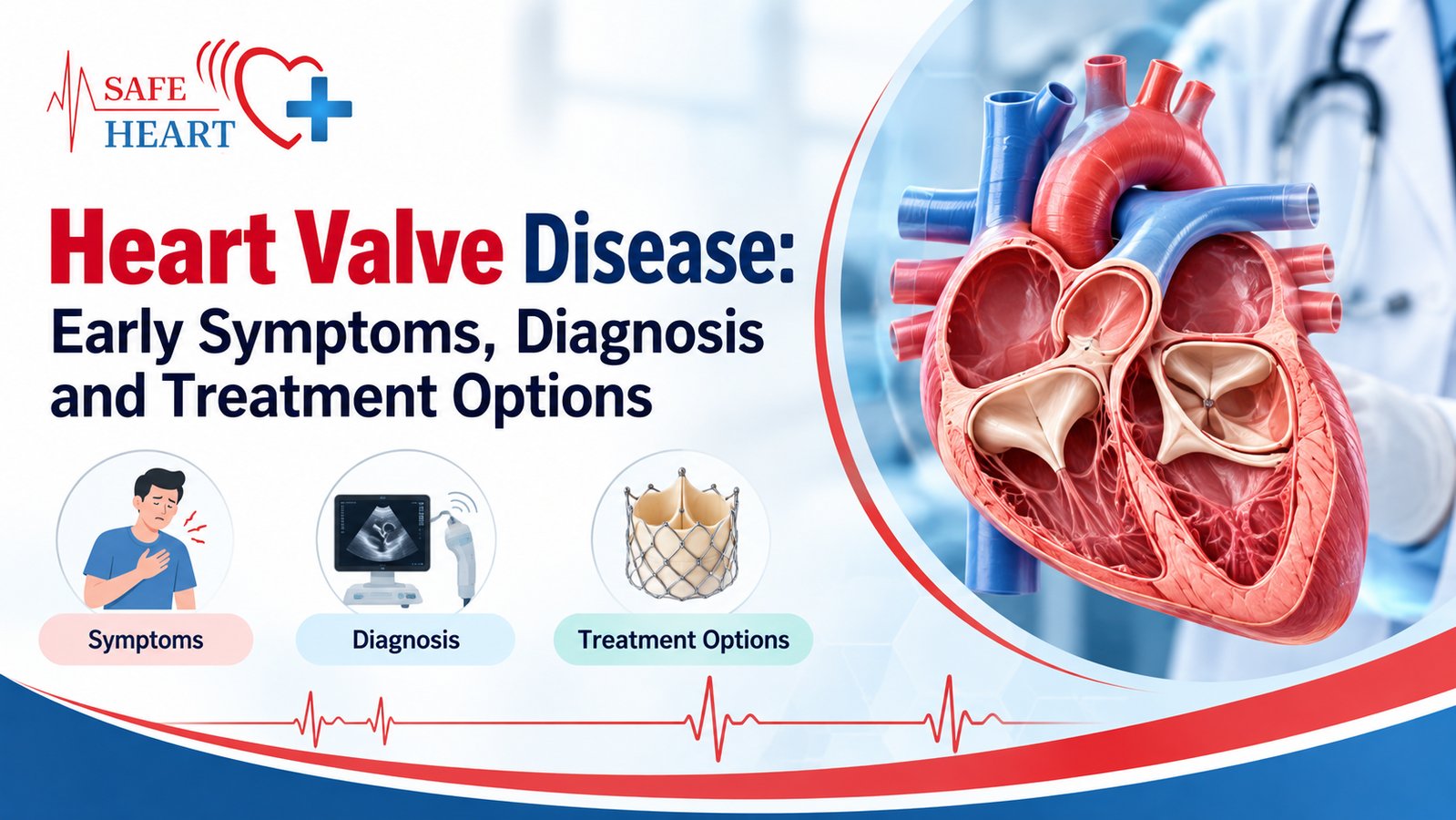
The human heart has four valves that keep blood flowing in the right direction through its chambers. These valves open and close with every heartbeat, allowing blood to move efficiently throughout the body. When one or more valves become damaged, narrowed or unable to close properly, the condition is known as heart valve disease. If left untreated, it may affect the heart’s ability to pump blood efficiently and lead to complications such as heart failure, irregular heart rhythms and reduced physical stamina.
Recognising the early symptoms of heart valve disease can help patients seek timely medical attention. Understanding the available diagnostic tests and treatment options is equally important for making informed decisions about heart health. Consulting an experienced Heart Specialist in Jaipur can help patients understand their symptoms, assess the severity of the condition and determine the next steps in their care.
What Is Heart Valve Disease?
Heart valve disease occurs when one or more of the heart’s four valves do not function properly. The valves include the aortic, mitral, tricuspid and pulmonary valves. Each valve plays an important role in maintaining normal blood circulation.
There are three main types of heart valve problems:
- Valve stenosis: The valve becomes narrowed or stiff, restricting the amount of blood that can pass through it.
- Valve regurgitation: The valve does not close completely, allowing blood to flow backwards.
- Valve prolapse: A valve leaflet bulges backwards during the heartbeat and may sometimes cause leakage.
Aortic stenosis and mitral regurgitation are among the commonly encountered valve conditions. Their severity can range from mild abnormalities that require regular monitoring to serious problems that need intervention.
What Are the Early Symptoms of Heart Valve Disease?
Heart valve disease does not always cause noticeable symptoms in its early stages. Some people may have a valve abnormality for years before developing symptoms. As the condition progresses, the heart may have to work harder to maintain adequate blood circulation.
The following warning signs should not be ignored.
1. Breathlessness During Physical Activity
Shortness of breath while climbing stairs, walking or performing everyday activities may indicate that a valve problem is affecting the heart’s ability to maintain normal circulation. Breathlessness that occurs while lying down or wakes someone from sleep also requires medical assessment.
2. Unusual Fatigue and Weakness
When the heart cannot pump blood efficiently, the body’s tissues may receive less oxygen-rich blood than they need. This can lead to persistent tiredness, reduced exercise tolerance and difficulty completing routine activities.
3. Chest Pain or Discomfort
Some patients, particularly those with aortic stenosis, may experience chest pressure, tightness or pain. Chest discomfort can have several causes, including potentially life-threatening heart conditions, so it should not be self-diagnosed.
4. Dizziness or Fainting
A narrowed heart valve can sometimes limit blood flow, particularly during physical exertion. This may cause light-headedness or fainting. Such symptoms require prompt medical evaluation, especially when they occur during exercise.
5. Swelling in the Legs, Ankles or Feet
Fluid accumulation in the lower limbs may occur when a heart valve problem contributes to heart failure. Swelling accompanied by breathlessness or sudden weight gain warrants timely assessment.
6. Palpitations or an Irregular Heartbeat
Some valve conditions are associated with abnormal heart rhythms, including atrial fibrillation. Patients may notice a racing, fluttering or irregular heartbeat.
Important: Seek emergency medical care for severe or persistent chest pain, sudden severe breathlessness, fainting with ongoing symptoms or other signs of a medical emergency. Do not wait for a routine appointment.
What Causes Heart Valve Disease?
Heart valve disease can develop gradually with age or occur because of an underlying medical condition. Common causes and risk factors include:
- Age-related changes: Valve leaflets may become thickened, stiff or calcified over time.
- Congenital heart conditions: Some people are born with valves that have an abnormal structure, such as a bicuspid aortic valve.
- Rheumatic heart disease: Damage following rheumatic fever can affect the mitral and other heart valves.
- Infective endocarditis: An infection involving the inner lining of the heart can damage its valves.
- Previous heart attack: Damage to the heart muscle or supporting structures may affect valve function.
- Connective tissue disorders: Certain inherited conditions can affect valve structure and strength.
The cause, type and severity of the valve abnormality help determine the appropriate management plan.
How Is Heart Valve Disease Diagnosed?
A diagnosis involves reviewing the patient’s symptoms, medical history and physical examination findings. A doctor may listen to the heart for a murmur, which can suggest turbulent blood flow, although a murmur alone does not confirm the severity or type of valve disease.
A Cardiologist in Jaipur may recommend one or more of the following investigations, depending on the patient’s condition.
1. Echocardiography
An echocardiogram uses ultrasound waves to produce images of the heart. It is the principal test for evaluating most heart valve disorders. It helps assess valve structure, the direction and severity of abnormal blood flow, heart chamber size and pumping function.
2. Electrocardiogram (ECG)
An ECG records the electrical activity of the heart. It can identify certain rhythm abnormalities and provide additional information about the heart’s condition, although it cannot independently diagnose or grade most valve problems.
3. Transoesophageal Echocardiography (TEE)
In selected cases, a specialised ultrasound probe is placed in the oesophagus to obtain detailed images of the heart and its valves. TEE may be useful when standard echocardiography does not provide sufficient information or when detailed assessment is needed before an intervention.
4. CT Scan and Cardiac Imaging
Cardiac CT may be used to assess valve calcification, aortic anatomy and other structural details. It is particularly useful when evaluating selected patients for transcatheter valve procedures.
5. Cardiac Catheterisation
Cardiac catheterisation is sometimes required when doctors need additional information about pressure inside the heart, blood flow or coronary artery disease. It is not necessary for every patient with valve disease.
The choice of tests depends on the symptoms, initial findings and suspected valve condition. An accurate diagnosis helps the treating team determine whether monitoring, medication or a valve procedure is appropriate.
What Are the Treatment Options for Heart Valve Disease?
Treatment depends on which valve is affected, the severity of the problem, the patient’s symptoms, heart function, age, general health and other medical conditions. Not every patient requires surgery immediately.
1. Regular Monitoring
Mild valve disease without significant symptoms may be managed through periodic medical reviews and repeat echocardiograms. Follow-up intervals depend on the type and severity of the condition.
Patients should report any new breathlessness, chest discomfort, reduced exercise capacity, fainting or swelling rather than waiting until their next scheduled check-up.
2. Medications
Medicines may help manage associated problems such as high blood pressure, fluid retention, heart failure or abnormal heart rhythms. However, medication generally cannot correct a severely narrowed valve or reliably repair a valve that leaks significantly.
The treatment plan should be individualised, and medicines should only be taken as prescribed.
3. Surgical Valve Repair
Valve repair involves correcting the damaged valve while preserving as much of the patient’s natural valve tissue as possible. Depending on the valve and the underlying problem, repair may improve its function and avoid the need for replacement.
4. Heart Valve Replacement
When a valve is severely damaged or cannot be repaired effectively, replacement may be recommended. The damaged valve is replaced with either a mechanical valve or a biological tissue valve.
The choice depends on factors such as age, expected durability, other medical conditions, suitability for anticoagulation and patient preferences. Each option has specific benefits and limitations that should be discussed with the treating team.
5. Transcatheter Aortic Valve Implantation (TAVI/TAVR)
TAVI, also called TAVR, is a minimally invasive procedure used to treat selected patients with aortic stenosis. A replacement valve is delivered through a catheter, commonly via an artery in the groin, and positioned inside the diseased aortic valve.
Unlike conventional open-heart valve replacement, TAVI generally does not require opening the chest or stopping the heart for the procedure. However, it is not suitable for every type of valve disease or every patient.
A specialist team evaluates the patient’s symptoms, echocardiogram, CT findings, anatomy, surgical risk and other health factors before deciding whether TAVI or surgery is the more appropriate option.
Can Heart Valve Disease Be Treated Without Open-Heart Surgery?
Yes, certain heart valve conditions can be treated using catheter-based procedures, depending on the affected valve, the type of abnormality and the patient’s suitability.
For example, TAVI can treat selected cases of aortic stenosis. Other catheter-based procedures may be available for particular mitral or tricuspid valve conditions.
However, minimally invasive treatment is not appropriate for every patient. Some people benefit more from surgical repair or replacement, while others may only need regular monitoring. A detailed assessment by a qualified heart specialist is necessary before choosing a treatment.
What Happens If Heart Valve Disease Is Left Untreated?
The consequences depend on the severity and progression of the condition. Significant valve disease can gradually place additional strain on the heart and may lead to:
- Heart failure and fluid accumulation.
- Abnormal heart rhythms, including atrial fibrillation.
- Enlargement or weakening of the heart chambers.
- Reduced ability to perform physical activities.
- Increased risk of serious complications in advanced cases.
Early detection and appropriate follow-up can help doctors identify changes in valve function and determine the right time for treatment. Patients should not assume that the absence of symptoms means a valve problem is harmless.
When Should You Consult a Heart Valve Specialist in Jaipur?
You should consider a medical evaluation if you experience unexplained breathlessness, persistent fatigue, chest discomfort, fainting, a new irregular heartbeat or swelling in the legs. A heart murmur detected during a routine examination may also require further investigation.
People with known valve disease, congenital valve abnormalities or a history of rheumatic fever may need periodic cardiac assessment even when they feel well.
Consulting a Heart Valve Specialist in Jaipur can help establish the diagnosis, assess disease severity and explain suitable management options. Patients with severe or complex valve disease may benefit from evaluation by a multidisciplinary heart team that includes cardiologists, cardiac surgeons and imaging specialists.
Heart Care at Safe Heart Clinic, Jaipur
Dr. Amit Gupta at Safe Heart Clinic, Jaipur, provides a point of contact for patients seeking cardiac evaluation and guidance regarding heart conditions. People concerned about possible valve disease can discuss their symptoms, medical history and the need for appropriate cardiac investigations.
Patients looking for a Cardiologist in Jaipur should seek an assessment based on their individual symptoms and clinical findings. For suspected heart valve disease, echocardiography and other investigations may be recommended to clarify the diagnosis and guide further care.
The appropriate treatment varies from person to person. Patients who require advanced valve intervention may need referral to a centre equipped to provide the specific procedure indicated by their clinical condition.
Frequently Asked Questions (FAQs)
1. What is the most common symptom of heart valve disease?
Breathlessness, fatigue, reduced exercise tolerance and chest discomfort are possible symptoms. Some patients have no symptoms during the early stages, which is why clinical assessment and appropriate follow-up are important.
2. Can heart valve disease be detected through an ECG?
An ECG can identify certain electrical or rhythm abnormalities, but it cannot reliably diagnose or measure the severity of most valve problems. Echocardiography is generally the main test used to assess heart valve structure and function.
3. Is heart valve disease curable?
Some valve problems can be corrected or substantially improved through repair or replacement procedures. Other cases may be managed with monitoring and medication for associated symptoms. The outcome depends on the specific condition, its severity and the treatment selected.
4. Is TAVI better than open-heart surgery?
Neither option is universally better. TAVI may be suitable for selected patients with aortic stenosis, while conventional surgery may be preferred for others, including certain patients who need additional cardiac procedures. The decision depends on a detailed clinical and anatomical assessment.
5. Can heart valve disease develop without symptoms?
Yes. Mild and even some significant valve abnormalities may remain asymptomatic for a period. A heart murmur or an incidental imaging finding may be the first indication of a problem.
6. Which doctor should I consult for heart valve disease in Jaipur?
A cardiologist can assess symptoms, arrange appropriate investigations and explain treatment options. Patients with significant or complex valve disease may require assessment by a heart valve specialist and a multidisciplinary team.
Conclusion
Heart valve disease can affect blood circulation and place additional strain on the heart, but early recognition and appropriate management can make an important difference. Understanding the symptoms, obtaining an accurate diagnosis and attending regular follow-up appointments help patients make informed decisions about their care.
Whether the recommended approach is monitoring, medication, valve repair, valve replacement or a catheter-based procedure such as TAVI, treatment should be tailored to the individual patient’s condition.
If you notice persistent breathlessness, unexplained fatigue, chest discomfort or fainting, seek medical assessment rather than ignoring the symptoms. Timely consultation with a qualified cardiologist can help identify the cause and determine the next appropriate step in managing your heart health.


