

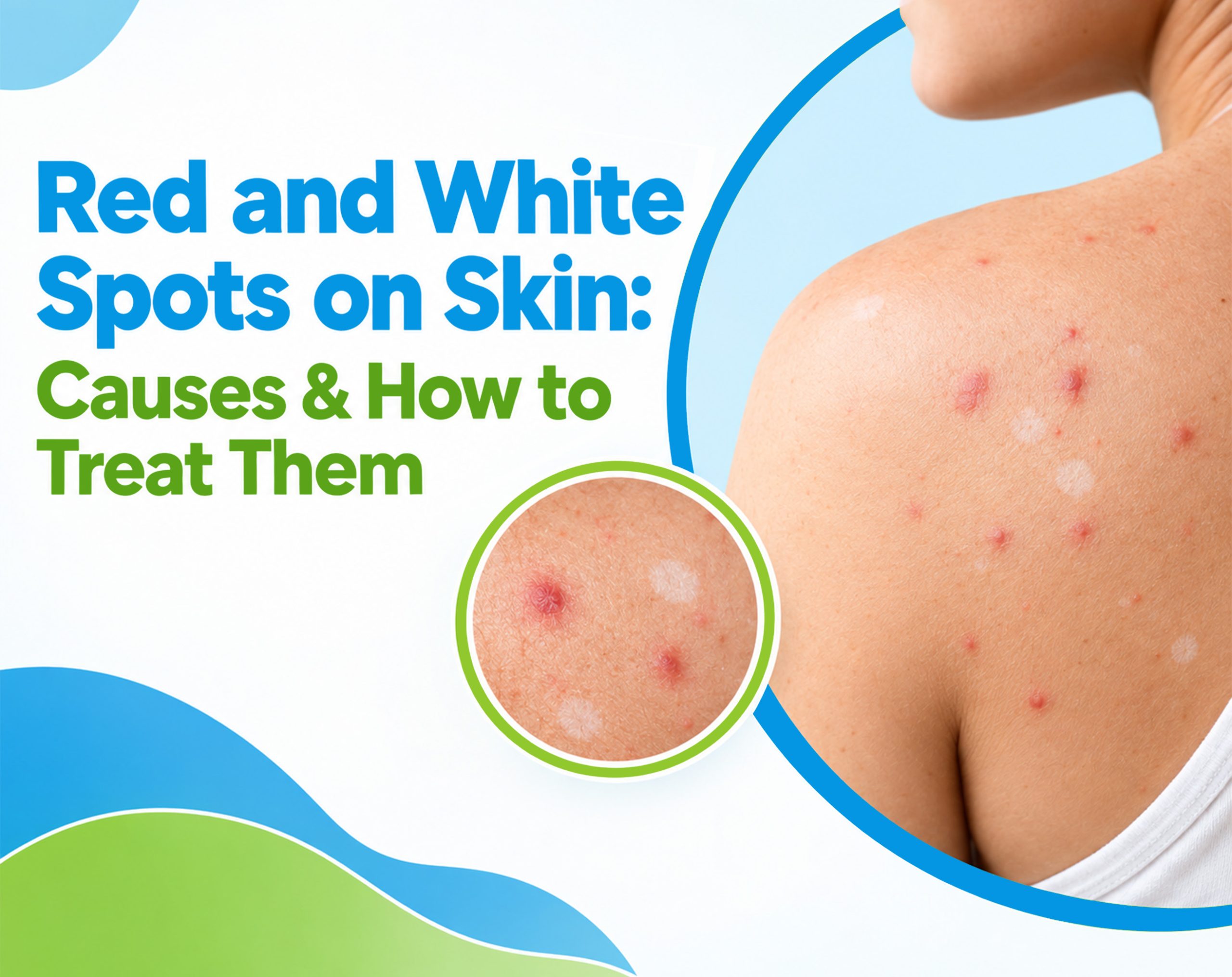
Noticing unexpected skin discolorations can be jarring. Whether they appear suddenly overnight, gradually spread across a patch of skin, or present as raised, itchy bumps, skin spots are among the most frequent reasons individuals seek medical advice.
The skin serves as a primary protective barrier and an indicator of internal health. Consequently, red spots can stem from a wide spectrum of underlying causes—ranging from harmless vascular growths and localized allergic reactions to systemic infections or chronic inflammatory skin conditions.
This clinical guide explores the most common causes of red cutaneous lesions, how to recognize key diagnostic features, when to treat them at home, and when to seek a professional dermatological evaluation.
What Causes Red Spots on the Skin?
Understanding the primary cause of a skin lesion requires looking at its structural characteristics: whether it is flat (macular), raised (papular or nodular), vascular, inflammatory, or infectious.
1. Vascular Lesions (Blood Vessel Growths or Bleeding)
Vascular spots occur when blood vessels dilate, proliferate, or rupture beneath the skin.
- Cherry Angiomas: Small, bright crimson or violaceous papules caused by an overgrowth of blood vessels. They are entirely benign, commonly appear on the trunk and limbs after age 30, and do not blanch (turn white) when pressed.
- Petechiae and Purpura: Pinpoint reddish or purple dots that form when capillaries bleed directly into the dermis. Petechiae are smaller than 3 mm, while purpura refers to larger patches. A defining feature is that they do not fade or turn pale when firm pressure is applied (non-blanching).
- Spider Angiomas: Central red spots surrounded by tiny, radiating vessel lines resembling a spider’s web, often associated with hormonal shifts or liver vascular dynamics.
2. Inflammatory and Allergic Skin Conditions
Inflammation often triggers localized blood flow, producing red, warm, or raised marks on the skin surface.
- Contact Dermatitis: An acute allergic or irritant response to substances like fragrances, nickel, soaps, or plants (e.g., poison ivy). It typically presents as an itchy, red rash, sometimes accompanied by tiny blisters.
- Hives (Urticaria): Raised, itchy welts that appear suddenly due to histamine release triggered by allergens, stress, temperature changes, or viral infections. They frequently shift location or resolve within 24 hours in individual spots.
- Eczema (Atopic Dermatitis): Characterized by dry, red, inflamed patches that itch intensely. It commonly affects flexor surfaces like the inner elbows, knees, and neck.
3. Microorganism Infections
Fungal, bacterial, and viral pathogens frequently trigger distinct patterns of cutaneous redness.
- Tinea Versicolor and Ringworm: Fungal skin infections that manifest as circular, scaly patches. Fungal activity can disrupt melanin production, causing lesions to appear red, pink, brown, or hypopigmented depending on individual skin tone.
- Folliculitis: Inflammation or bacterial infection of individual hair follicles, appearing as small, red, pus-filled bumps that resemble tiny pimples.
- Viral Exanthems: Widespread red eruptions triggered by systemic viral infections such as chickenpox, measles, or roseola.
Evaluating Dual-Color or Complex Skin Spots
While isolated red marks are common, many inflammatory and fungal conditions present with mixed characteristics—such as combined erythematous (red) and depigmented (white) areas. For instance, post-inflammatory hypopigmentation can leave pale marks where an inflamed red spot previously healed.
Understanding how different dermatological conditions present with mixed pigmentation patterns—such as combined red and white spots on skin—helps narrow down whether an eruption is fungal, post-inflammatory, or autoimmune in nature.
Diagnostic Self-Check: The Blanching Test
A practical initial check clinicians use to evaluate red lesions is the diascopy or blanching test:
- Press a clear glass slide or a clean thumb firmly against the red spot for 3 to 5 seconds.
- Observe the color change under pressure.
- If the spot turns white (blanches): The redness is caused by dilated, intact blood vessels (hyperemia), common in inflammatory rashes, allergic reactions, and hives.
- If the spot stays red/purple (non-blanching): Blood has leaked outside the capillary wall into the tissue (extravasation), as seen in petechiae, purpura, or bruising. Non-blanching spots warrant medical evaluation to rule out underlying vascular or coagulation issues.
When to Seek Immediate Medical Attention
While many red skin spots are benign and resolve on their own, certain red flags require prompt evaluation by a general practitioner or dermatologist:
- Rapid Spread: Spots that spread quickly across large body areas within hours.
- Fever or Systemic Symptoms: Red spots accompanied by fever, joint pain, shortness of breath, fatigue, or difficulty swallowing.
- Non-Blanching Petechiae: Widespread tiny red or purple dots that do not turn pale under pressure, especially if accompanied by illness.
- Signs of Infection: Increasing warmth, swelling, severe pain, or red streaks spreading outward from a spot.
- Changing Moles or Lesions: Any spot that changes in size, shape, color, bleeds spontaneously, or develops irregular borders (following the ABCDE criteria for skin checks).
Frequently Asked Questions
1. Are red spots on the skin always a sign of cancer?
No. The vast majority of red skin marks stem from benign conditions like cherry angiomas, insect bites, minor friction, contact dermatitis, or localized fungal infections. Skin cancers like basal cell carcinoma or amelanotic melanoma can sometimes appear red or pink, which is why persistent or changing spots should be checked by a doctor.
2. What causes tiny red spots on the skin that look like blood dots?
Tiny pinpoint dots that look like blood are often cherry angiomas (benign vessel growths) or petechiae (microscopic capillary bleeding). While cherry angiomas are slightly raised and harmless, petechiae are flat and non-blanching, which may require medical investigation.
3. Can stress cause red spots to appear on the skin?
Yes. Stress triggers the release of cortisol and histamine in the body, which can flare underlying conditions like eczema, psoriasis, or rosacea, and induce acute stress hives (urticaria).
4. How are benign red skin spots treated?
Treatment depends entirely on the underlying cause. Allergic rashes respond to topical hydrocortisone and antihistamines, fungal spots require topical antifungals, and bacterial folliculitis may require targeted antibiotics. Harmless growths like cherry angiomas do not require treatment unless removed for cosmetic reasons via laser or electrocautery.
Summary
Accurately identifying red spots requires looking at their texture, duration, blanching response, and accompanying symptoms. While most skin discolorations are harmless reactions to environmental triggers or benign vascular changes, tracking how spots develop over time ensures timely care when medical treatment is needed.


