


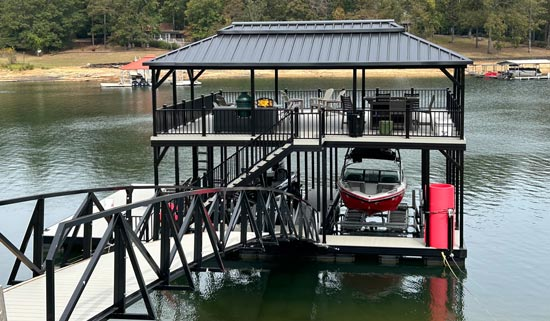
Picking a dock isn’t just about parking a boat. It’s about the look. You’ve got a nice house, right? Why slap a cheap-looking eyesore on the water? If the dock doesn’t match the house, it just feels off. You want the place to flow. Integrating aluminum boat docks into your landscape is easier than it sounds. It’s about being smart with your colors and lines. If you get it right, the dock looks like it’s always been part of the property. If you mess it up, it looks like an afterthought. Let’s talk about how to stop that from happening.
Stop Trying Too Hard with the Design
- Look, don’t overcomplicate it. If your house has a lot of wood and stone, you don’t want a dock that looks like it belongs on a spaceship. Keep the vibe consistent.
- Stick to earth tones if your yard is full of trees.
- Match your railing style to your porch.
- Don’t buy the biggest dock if your shoreline is small.
- Keep the lines clean so the dock doesn’t fight the view.
Why Your Neighbors Might Be Jealous
- A good dock setup does two things: it works hard and looks sharp. That’s why aluminum boat docks are the go-to for anyone who actually uses their waterfront. They aren’t just sturdy; they’re clean.
- Aluminum doesn’t rot out after three seasons.
- You don’t have to spend your weekends staining wood.
- The powder-coating tech these days is seriously good.
- It stays cool underfoot, which is a major plus.
Colors Matter More Than You Think
Don’t just pick “gray” because it’s the standard. Look at your siding and the stones on your path. You want the dock to serve as a bridge between the house and the lake. If your house is light-colored, choose a shade in the tan or light gray family. If you’ve got a dark, moody lodge, go darker. That approach makes the whole property look like a cohesive project rather than a collection of random parts you bought on sale.
Stop Buying Docks That Bounce
Nothing is worse than a dock that reacts to every ripple. If your lake sees heavy traffic, you need weight and solid engineering. Some docks feel like a pool float. That’s annoying. Look for companies that use stabilization tech. If the dock doesn’t feel solid, you won’t use it. You’ll just look at it from the porch. That’s a waste of money. Buy something that can take a beating from the waves.
Making the Space Your Own
- Think about the roof. Do you need one? A gable roof looks classic, especially on older homes. A flat sundeck is great for tanning. Just be careful not to block your view. You’re paying for the lake, not the roof of your dock.
- Use lighting to make it usable at night.
- Don’t clutter the deck with junk.
- Keep your accessories tucked away so they stay clean.
- Always leave room to walk around your boat.
Don’t Forget the Infrastructure
You can make it look pretty, but if the foundation is bad, it’s toast. Talk to someone who knows the water in your area. They know whether the bottom is muddy or rocky. That changes how you anchor the whole thing. Don’t guess. If you pick the wrong anchoring, you’ll be out there fixing it every spring. Nobody wants that.

Wrapping Up Your Waterfront Dream
Building a dock is a big move. Do it once, do it right. Pick materials that last, match the style to your home, and don’t get talked into anything you don’t need. When you use solid aluminum boat docks with Gable roof decks, you’re pretty much set for life. Check out the guys at Flotation Systems Aluminum Boat Docks if you want to see how this stuff should be built. They’ve got the right idea about keeping things sturdy and clean. Don’t rush the decision—get it right, and enjoy the water.
Frequently Asked Questions
1. Can I really use aluminum boat docks on any kind of shoreline?
Honestly, yeah. Most people worry that aluminum won’t fit a rustic setting, but that’s not true anymore. With all the color options and decking styles available, you can make it look as rugged as any wooden dock. The main thing is how you anchor it to your specific ground. Whether you’re on a rocky cliff or a flat, muddy beach, you just need the right mounting hardware. Once it’s down, it’s going to stay there much longer than wood ever would.
2. Is a floating dock better than a fixed one?
It depends entirely on your water. If you live somewhere where the water level bounces up and down like a yo-yo, you have to go with a floating dock. Otherwise, you’re constantly adjusting your boat lines. But if you have stable water and you really hate that slight movement under your feet, a fixed dock is much more rigid. Most people who live on big, active lakes prefer the floating style because it’s just less of a headache when the weather gets rowdy.
3. Does the dock require professional installation?
You could probably try to do it yourself if you’re an engineer with a massive crane, but I wouldn’t recommend it. These things are heavy, and if you get the anchoring wrong, you’re going to be in trouble the first time a storm rolls through. Let the pros handle the installation. It’s worth the extra cash just to know the dock isn’t going to end up in your neighbor’s yard after a windy night. It also keeps the warranty valid.
4. Why is aluminum preferred over wood for marine decking?
It’s simple: wood is a pain. Wood rots, warps, and becomes a splinter factory if you don’t stay on top of maintenance. Plus, you’ve got to pressure wash it constantly. Aluminum decking, especially the type that locks together to be watertight, is basically invincible. It doesn’t care about the sun, rain, or ice. It’s just cleaner and safer for your feet, and it stays looking brand new for years without you having to touch it.
5. How do I match the dock style to my home’s architecture?
Look at the lines of your house. If your house has arches and curves, choose a dock with arched supports or decorative balusters. If your house is a modern box with lots of glass, opt for a low-profile, straight-line dock with a simple color scheme. The goal is to make the dock feel like an extension of your porch. If you pick a color that matches your house’s trim or roof, the transition from the grass to the water will look natural.


