

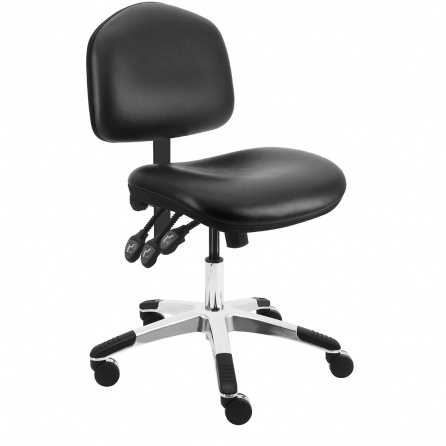
When you spend hours conducting experiments, analyzing samples, or working at a laboratory bench, your chair can significantly affect your comfort and productivity. Poor seating may contribute to back discomfort, shoulder tension, leg pressure, and tiredness during long shifts. Choosing the right laboratory chair helps you maintain a comfortable working posture while supporting the demands of your laboratory environment.
To reduce fatigue, you need to consider more than cushioning or appearance. Seat height, back support, adjustability, foot support, material, and workstation compatibility all influence how comfortably you can work throughout the day. By evaluating these features before purchasing, you can select seating that supports your daily tasks and helps you work more comfortably.
Choose a Chair with Adjustable Seat Height
Your chair should allow you to position yourself comfortably in relation to your laboratory bench, equipment, and work surface. A seat that is too high may leave your feet unsupported, while a seat that is too low can encourage awkward bending and shoulder positioning.
Look for a laboratory chair with a height-adjustment mechanism that accommodates your body and workstation.
Before choosing a chair, check these factors:
Feet and leg position: Your feet should rest securely on the floor or an appropriate footrest.
Knee clearance: Keep enough space behind your knees to avoid excessive pressure.
Work surface alignment: Position your elbows comfortably near the height of your working surface.
Adjustment range: Confirm that the chair suits the different heights of the people who will use it.
If you work at a high laboratory bench, consider a drafting-style chair with a suitable foot ring. Proper foot support helps prevent your legs from dangling and reduces pressure associated with prolonged sitting.
Prioritize Back Support and Comfortable Posture
Sitting in one position for extended periods can increase discomfort, especially when your chair does not support your posture adequately. A supportive backrest can help you maintain a more natural spinal position without constantly leaning forward.
When comparing chairs, look for a backrest that supports your lower back and allows you to sit without excessive slouching. Adjustable backrests can be particularly useful when several employees share the same workstation.
You should also consider the following features:
Lumbar support: Helps support the lower back during seated work.
Backrest angle: Allows you to adjust your position for different tasks.
Seat depth: Provides adequate thigh support without pressing against the backs of your knees.
Armrests: May help reduce shoulder strain when they fit beneath or around your workstation without restricting movement.
Explore adjustable laboratory chairs for ergonomic support and comfortable bench work to compare seating options for your laboratory requirements.
Remember that no chair eliminates fatigue on its own. Changing positions regularly and taking brief movement breaks remain important, even when you have supportive seating.
Match the Chair to Your Laboratory Tasks
Different laboratory activities require different seating features. A chair designed for routine desk work may not be suitable for precision testing, cleanroom operations, or work at elevated benches.
Identify your main tasks before selecting a chair.
For microscopy, inspection, or detailed sample preparation, prioritize stable seating, suitable height adjustment, and back support. If you frequently move between workstations, a chair with appropriate mobility may help you reposition without repeated lifting or twisting.
For cleanroom environments, material compatibility and contamination-control requirements also matter. Choose surfaces that withstand your approved cleaning and disinfection procedures. Depending on your facility, you may need cleanroom-compatible upholstery or easy-to-clean, nonporous surfaces.
Consider these practical requirements:
Routine laboratory work: Adjustable height and supportive seating.
Precision tasks: Stable positioning and suitable workstation alignment.
High benches: Extended height adjustment and secure foot support.
Cleanroom applications: Compatible materials and cleaning procedures.
Shared workstations: Simple adjustments that different users can operate easily.
The best chair is one that fits both your physical needs and the technical requirements of your working environment.
Evaluate Seat Cushioning and Materials
Seat cushioning affects comfort during long periods of laboratory work. However, a softer seat is not automatically better. Excessively soft cushioning may provide inadequate support, while a seat that is too firm may create pressure points.
Look for a seat that distributes your weight comfortably and maintains its shape during regular use. Check the seat width, contour, and depth to ensure that it accommodates your body without restricting movement.
Material selection is equally important. Laboratory seating may encounter cleaning agents, moisture, powders, or other substances depending on the application. Select materials that are compatible with your laboratory’s cleaning protocols and environmental conditions.
Before purchasing, ask yourself:
- Can you clean the chair without damaging its surface?
- Does the upholstery resist wear from daily use?
- Is the seat comfortable during a typical work session?
- Does the material meet your facility’s contamination-control requirements?
For cleanrooms and controlled environments, confirm the manufacturer’s specifications rather than assuming that every easy-to-clean chair is suitable for cleanroom use.
Check Stability, Mobility, and Foot Support
A stable chair helps you maintain a secure working position when handling samples or operating equipment. The base, casters, and adjustment mechanisms should suit your floor surface and daily activities.
If your work involves frequent movement, suitable casters can make it easier to reposition the chair. However, excessive movement may be undesirable during precision procedures. Consider locking options or stationary seating when your application requires greater stability.
Foot support deserves special attention when your chair is raised above standard desk height. An integrated foot ring or a suitable separate footrest can provide a stable resting position for your feet.
Before making your decision, test the adjustment controls, check the base for stability, and verify the chair’s load capacity. You should also consider replacement parts, maintenance requirements, and expected service life when comparing overall value.
Compare Chairs Before Making Your Purchase
Avoid selecting a laboratory chair based on price or appearance alone. Evaluate each option against your workstation dimensions, daily tasks, comfort requirements, and cleaning procedures.
Create a simple comparison checklist covering seat-height range, lumbar support, seat depth, foot support, material compatibility, stability, and maintenance. If possible, test the chair at your actual workstation before ordering several units.
For additional guidance, visit Global Lab Supply to review laboratory equipment and seating options.
If you need help identifying a suitable chair for your application, contact the laboratory equipment team for assistance with your seating requirements.
Choosing the right chair is an investment in a more comfortable working environment. When you combine suitable seating with correct workstation setup, regular movement, and appropriate task rotation, you can better manage fatigue throughout your laboratory shift.
Frequently Asked Questions
1. What features should you look for in laboratory chairs to reduce fatigue?
Prioritize adjustable seat height, supportive backrests, appropriate seat depth, comfortable cushioning, and foot support. Your chair should also match your workstation height and the physical demands of your laboratory tasks.
2. Can an ergonomic laboratory chair prevent back pain?
An ergonomic chair may help reduce discomfort associated with poor sitting posture, but it cannot guarantee the prevention or treatment of back pain. Proper workstation setup, regular movement, and appropriate medical advice when symptoms persist are also important.
3. Are laboratory chairs different from regular office chairs?
Yes. Laboratory chairs may offer specialized materials, easy-clean surfaces, extended height ranges, foot rings, or compatibility with controlled environments. The required features depend on your laboratory’s tasks and safety procedures.
4. Do you need a foot ring for a laboratory chair?
A foot ring can be helpful when you sit at a high bench and cannot comfortably place your feet on the floor. It provides support for your feet and helps prevent your legs from dangling.
5. How can you maintain laboratory chairs for long-term comfort?
Inspect adjustment mechanisms, casters, bases, and upholstery regularly. Clean the chair according to manufacturer instructions and your facility’s procedures. Replace damaged components promptly and reassess the chair if it no longer provides adequate support.


