

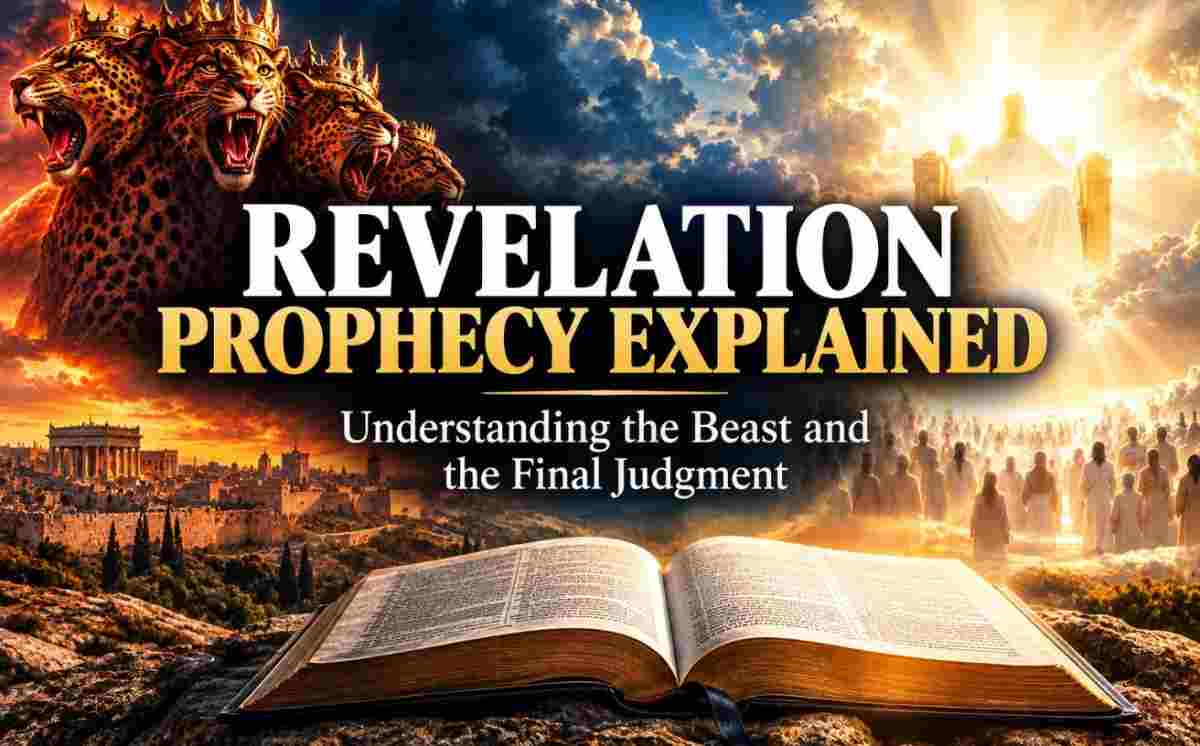
The Book of Revelation contains some of the Bible’s most fascinating prophecies, describing mysterious beasts, divine judgments, spiritual conflict, and the ultimate triumph of God. For readers searching for Revelation Prophecy Explained, understanding these visions requires examining their biblical context and connections with other prophetic passages. The Beast and the Final Judgment are particularly important because they reveal themes of authority, deception, accountability, and hope.
By studying Revelation alongside the Book of Daniel and Jesus’ teaching about the end times, readers can explore how these prophetic themes connect and why they remain significant for Christians today.
Understanding the Beast in the Book of Revelation
The Beast appears prominently in Revelation 13 and is associated with authority, deception, and opposition to God. Its description has generated considerable discussion throughout Christian history, with different interpretations attempting to explain its identity and role in biblical prophecy.
Daniel 7 provides important background for understanding this imagery. Daniel describes four beasts emerging from the sea, representing kingdoms within a prophetic vision. Revelation uses similar imagery, encouraging readers to compare these passages rather than interpret the Beast in isolation.
The Beast’s significance can be explored through several themes:
- Political authority: The imagery portrays power that challenges divine authority and influences nations.
- Religious deception: Revelation warns about misleading claims and signs that can draw people away from the truth.
- Worship and allegiance: The conflict concerns whom people choose to follow and obey.
- Persecution: The prophetic narrative describes opposition against those who remain faithful to God.
A careful study of these themes helps readers understand the Beast as part of Revelation’s broader message about spiritual faithfulness and the conflict between divine authority and human rebellion.
Revelation Prophecy Explained: What Is the Mark of the Beast?
One of the most frequently discussed subjects in biblical prophecy is the mark of the Beast. Revelation 13:16–18 describes a mark associated with the right hand or forehead and connects it with buying and selling.
This passage has inspired various interpretations. Some Christians understand the mark as part of a future system, while others emphasise its symbolic relationship with loyalty, identity, and worship. The passage itself places the mark within a larger account of the Beast’s authority and the allegiance demanded from people.
When exploring Revelation Prophecy Explained, readers should distinguish between what Scripture explicitly states and what commentators infer. Not every technological development, financial system, or political event should automatically be identified as a fulfilment of this prophecy.
Instead, readers can examine the surrounding verses, compare related passages, and consider the spiritual message of the chapter. This approach encourages informed study rather than speculation driven by fear.
How Daniel and Revelation Connect
Revelation becomes easier to understand when its imagery is compared with other biblical prophecies. Daniel’s visions of kingdoms and beasts provide valuable background, while Jesus’ Olivet Discourse in Matthew 24 and Mark 13 addresses deception, tribulation, and the events associated with His return.
At Last Day Last Trump Ministries (LDLT), these connections form part of a broader study of biblical end-times chronology. The ministry examines Daniel’s prophecies, Jesus’ teaching, and John’s Revelation as complementary perspectives on prophetic events, presenting a proposed framework for understanding their relationship.
Several questions are particularly useful when studying these passages:
- Do the seven seals, seven trumpets, and seven bowls describe successive events or overlapping visions?
- How does Daniel’s prophecy concerning the abomination of desolation relate to Jesus’ warnings?
- What similarities exist between the beasts described in Daniel 7 and Revelation 13?
- How can the different prophetic passages be arranged into a coherent timeline?
Christians approach these questions from different perspectives. Idealism, Preterism, Historicism, and Futurism offer distinct ways of interpreting Revelation. Comparing these approaches helps readers understand why interpretations differ and how assumptions about history, symbolism, and future events influence conclusions.
Readers interested in this approach can visit LDLT Ministries to learn more about its resources and study of biblical prophecy.
Understanding the Final Judgment in Revelation
The Final Judgment is one of the most significant themes in Revelation’s concluding chapters. Revelation 20:11–15 describes a great white throne before which the dead stand for judgment. The books are opened, and the passage presents a final accounting of human actions.
This vision communicates that human choices matter and that injustice will not have the final word. It also reinforces the biblical teaching that earthly power cannot place anyone beyond divine accountability.
Three important themes emerge from this passage.
Divine justice and accountability: The judgment emphasises the seriousness of human actions and the belief that wrongdoing will ultimately be addressed.
The defeat of evil: Revelation portrays the end of the powers that oppose God, showing that their influence is neither absolute nor permanent.
The hope of restoration: Revelation 21 describes a new heaven and a new earth, presenting a vision in which suffering, death, and mourning come to an end.
Different Christian traditions interpret the timing and details of biblical judgment differently. Examining Revelation alongside other relevant passages allows readers to consider these differences while recognising the central themes of justice, accountability, and restoration.
Why the Beast and the Final Judgment Matter Together
The Beast and the Final Judgment are closely connected within Revelation’s wider narrative. The Beast represents opposition to God, while the judgment demonstrates that evil and unjust authority will not prevail forever.
This relationship gives Revelation a message that extends beyond predictions about future events. It challenges readers to consider deception, personal responsibility, perseverance, and faithfulness.
For students of biblical prophecy, the most productive approach is to compare passages carefully, examine their historical and literary contexts, and recognise where interpretations remain disputed. Studying Daniel, the teachings of Jesus, and Revelation together can provide a broader perspective on the themes that run throughout these books.
For LDLT Ministries, exploring these prophetic connections is an important part of understanding the proposed chronology of end-times events.
Frequently Asked Questions
1. Who is the Beast in the Book of Revelation?
The Beast in Revelation 13 represents a power associated with authority, deception, and opposition to God. Interpretations vary, with some Christians identifying a future individual or political system and others emphasising historical or symbolic meanings.
2. What does the mark of the Beast mean?
Revelation 13:16–18 connects the mark with buying and selling and places it within a wider discussion of worship and allegiance. Its precise identification remains disputed among Christian interpreters.
3. What happens during the Final Judgment?
Revelation 20:11–15 describes the great white throne judgment, where the dead stand before God and the books are opened. The passage emphasises divine justice, accountability, and the ultimate defeat of death and evil.
4. How are Daniel and Revelation connected?
Both books contain prophetic imagery involving kingdoms, beasts, conflict, and divine intervention. Comparing their visions helps readers explore recurring themes and different interpretations of biblical chronology.
5. Are the seven seals, trumpets, and bowls chronological?
Some interpreters understand these sequences as successive stages of judgment, while others view them as overlapping or recurring visions. Comparing the passages helps readers evaluate these different perspectives.
6. Where can I find books about Revelation prophecy?
Readers interested in studying biblical prophecy can explore the publications and resources offered by Last Day Last Trump Ministries through its online shop.
Explore Revelation Prophecy Books at LDLT Ministries
Want to explore the Book of Revelation beyond its mysterious symbols and prophetic visions? Last Day Last Trump Ministries (LDLT) offers resources for readers interested in understanding biblical prophecy, comparing Scripture passages, and investigating the relationship between Daniel, Jesus’ teaching, and Revelation.
Visit the LDLT online shop to browse available books and Bible study resources. Discover materials that can help you examine the Beast, the Final Judgment, and the wider biblical end-times timeline.
Whether you are beginning your study or seeking a more structured understanding of prophetic chronology, the right study resource can help you explore these subjects in greater depth.
Take the next step today: Visit the LDLT shop, browse the available publications, and choose a Bible prophecy book to support your personal Scripture study.


