


A restaurant lives or dies on the experience it creates. Food quality, service, ambience, and atmosphere all play a role — and so does temperature. An uncomfortably warm dining room detracts from even the best food. A noisy, poorly positioned air conditioning unit disrupts conversation and creates the wrong impression. Getting restaurant air conditioning right requires understanding the unique demands of a hospitality environment and designing a solution that addresses them holistically.
The Dual Challenge of Kitchen and Dining Room
Restaurants present a cooling challenge unlike most other commercial settings. The kitchen generates intense heat — from ovens, hobs, grills, and the sheer activity of a busy service — while the dining area needs to maintain a comfortable, welcoming temperature for guests who may be seated for an hour or more.
These two environments need to be addressed separately. Kitchen ventilation and cooling involves extract canopies, make-up air systems, and specialist equipment. Dining room climate control, meanwhile, demands solutions that are quiet, unobtrusive, and capable of managing the combined heat load of a full house of guests alongside thermal bleed from the kitchen.
What Makes a Good Restaurant Cooling Solution
The most important characteristic of restaurant air conditioning is balance. The system needs to provide meaningful cooling without creating draughts or cold spots that make some tables uncomfortable while others remain warm. This requires careful attention to unit placement, airflow direction, and the overall distribution of conditioned air throughout the space.
A commercial air conditioning unit for a restaurant should also operate quietly. Modern units vary considerably in noise output, and for dining environments where atmosphere is paramount, sound levels matter considerably. Units rated below 25 decibels for indoor operation are generally considered suitable for dining spaces.
System Options for Dining Spaces
- Concealed Ducted Systems — One of the most discreet solutions for design-focused restaurants, concealed ducted systems hide equipment within ceiling spaces and deliver conditioned air through subtle vents, preserving the overall interior aesthetic.
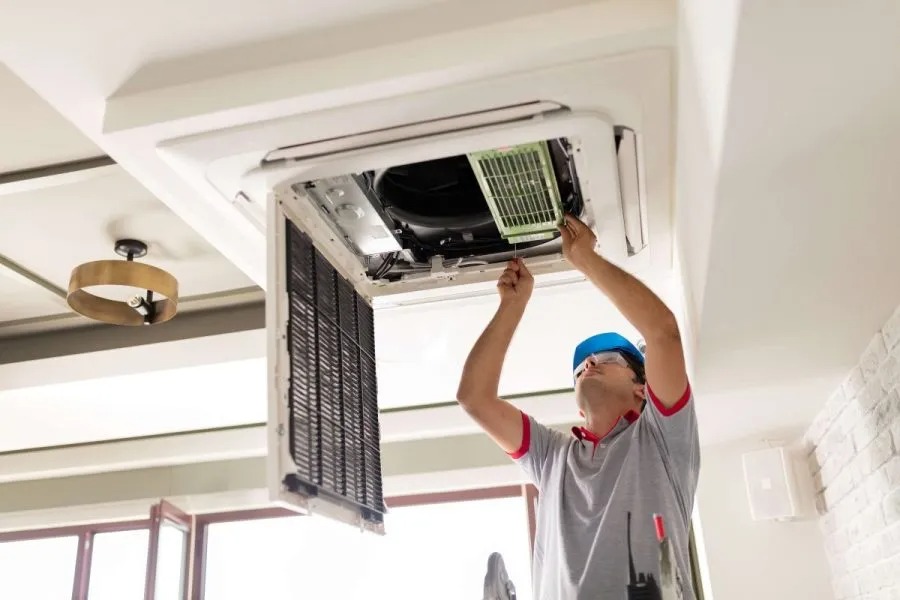
- Cassette Units — Ideal for open dining areas, cassette systems distribute airflow evenly in multiple directions, helping maintain consistent temperatures and improving comfort for both customers and staff.
- High-Wall Split Systems — A practical and cost-effective solution for smaller dining spaces, offering reliable cooling performance with relatively simple installation and maintenance requirements.
- VRF Multi-Zone Systems — Well suited to larger restaurants with separate dining areas, kitchens, and private spaces, allowing individual temperature control across multiple zones.
- Combined Ventilation and Cooling Systems — Provide both temperature control and continuous fresh air circulation, helping improve indoor air quality while supporting a comfortable dining environment.
Planning Around Occupancy Patterns
Restaurant occupancy varies considerably throughout the day and week. A commercial air conditioning unit sized for a packed Friday evening may be inefficient during a quieter Monday lunch service. Inverter technology and zoned controls allow the system to respond to actual demand rather than running at full capacity regardless of conditions.
Smart controls and programmable scheduling mean the system can begin cooling the dining room before service, ensuring the space reaches the desired temperature before the first guests arrive — without running at full output throughout the day.
Conclusion
Restaurant air conditioning is an investment in the overall dining experience as much as in staff comfort and energy management. A well-designed system that accounts for the unique heat dynamics of a restaurant environment helps create comfortable conditions where guests can relax, enjoy their experience, and stay longer. Companies such as Hamilton Air Conditioning Ltd can support restaurants with tailored cooling solutions designed to deliver reliable performance, comfort, and efficient climate control.


