

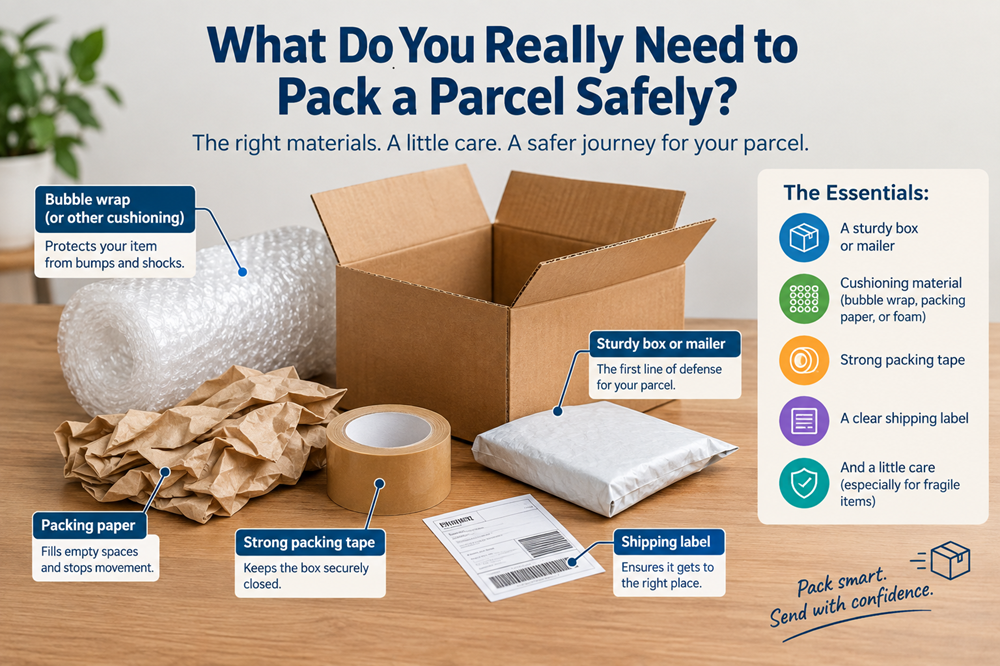
Packing a parcel sounds simple. Put the item in a box, add some padding, tape it shut and send it away. In reality, it gets a little more complicated when the product is fragile, heavy, oddly shaped or valuable. That is when the packaging you choose starts to matter.
Use enough protection where it matters.
Choose a box that fits, cushion fragile items, fill empty spaces and seal everything properly. Heavy, delicate and electrical products may need extra protection.
What Should Protect the Product First?
Before grabbing the nearest carton, think about what you are packing. A ceramic mug, a book and a metal component will not need the same treatment.
Bubble Wrap for Fragile Items
Anything that could crack, chip or dent needs cushioning. Large bubble wrap is useful for bigger or more delicate products because it creates a protective layer without making packing a huge job.
- Glassware, ceramics and decorative items
- Furniture parts and awkward components
- Products that need impact protection
For example, a vase should have cushioning around it before it goes into the carton. That extra layer can help absorb knocks during handling.
Which Box Should You Choose?
The carton gives the parcel its structure, so size matters. A box with too much spare room lets the contents move around. One that is too small can squeeze the product and leave little room for protection.
Single Wall Boxes for Everyday Parcels
For lighter products, a single wall carton can be more than enough. You do not always need the strongest box you can find.
- Clothing and everyday retail products
- Books and household goods
- Smaller orders
If you need to buy cardboard boxes, check the inside measurements. Wrapping and cushioning can take up more room than you expect.
Stronger Boxes for Heavy Goods
Heavy products place more pressure on the carton, especially when parcels are stacked during transport.
- Machinery parts
- Multiple products packed together
- Long or bulky goods
A stronger carton can make a noticeable difference here. The right size also stops the parcel from becoming unnecessarily difficult to handle.
How Do You Stop the Item Moving Inside?
A strong box cannot do its job properly if the contents bounce around inside. The goal is to keep the product reasonably snug without squeezing it.
Void Fill for Empty Spaces
Once the product is inside, check for gaps around it. Fill those spaces so the contents have less room to shift.
- Kraft paper for smaller gaps
- Air pillows for lightweight filling
- Bubble material for extra cushioning
Imagine sending several bottles in one parcel. If they are loose, they can knock into each other. Separating them and filling the spare space makes the journey safer.
What Should You Use to Seal the Parcel?
Getting the product into the box safely is only half the job. The carton also needs to stay closed from the moment it leaves you.
Packing Tape for a Reliable Seal
Tape should match the carton and the parcel’s weight. Vibac tape offers options for different sealing needs, so choose according to how the parcel will be handled.
- Tape across the full centre seam
- Add extra tape to heavier cartons
- Press the tape firmly onto clean cardboard
Do not rely on a tiny strip across the flaps. A proper seal should keep the box closed throughout its journey.
What Other Packaging Materials Might You Need?
There is no universal packing kit. The right packaging materials depend on the product, its size, weight and destination.
| Parcel Type | Useful Materials |
| Fragile glass | Cardboard box, bubble wrap, void fill, tape |
| Clothing | Mailing bag or carton, paper, tape |
| Electronics | Carton, anti-static protection, cushioning |
| Heavy parts | Strong carton, edge protection, strapping |
| Long items | Long box, cushioning, strong tape |
If you send parcels regularly, keep a few useful carton sizes and protective materials nearby. Working with reliable cardboard box suppliers can also make it easier to keep suitable boxes in stock.
How Can You Make Packing Safer?
Before giving the parcel to a courier, take a quick look at it.
- Give the box a gentle shake and listen for movement
- Make sure the product is not touching the outer walls
- Check that the flaps are sealed properly
- Add handling labels where needed
This takes a minute and can catch a problem before the parcel leaves.
What Should You Check Before Sending?
Give the finished parcel one last check. Check the corners, seams, and tape. Is anything sticking out? Does the carton feel weak? Can you hear the contents moving?
If the box is already damaged, replace it. Adding another strip of tape will not turn a worn-out carton into a strong one.
Fragile and heavy products may also need extra protection around corners, seams and exposed surfaces. The aim is not to use the maximum amount of packaging. Too much can add unnecessary weight and cost.
Use enough of the right material where it actually matters.
Conclusion
Packing a parcel safely does not need to be complicated. Start with a box that fits, protect anything that could break or scratch, fill empty spaces and seal the carton properly.
Once you understand what the product actually needs, packing becomes much easier. You can protect the contents without filling the box with every packaging material you have.
FAQs
1. What is the best material for protecting fragile items?
Bubble wrap, void fill and a strong carton work well for many fragile products.
2. How much bubble wrap should I use?
Use enough to cushion the item without making the carton difficult to close.
3. Should heavy items use double wall boxes?
They can benefit from stronger cartons, particularly during stacking and repeated handling.
4. Can paper replace bubble wrap?
Paper works well for wrapping and filling gaps, but fragile items may need stronger cushioning.
5. What tape is best for sealing cardboard boxes?
Choose tape based on the carton, parcel weight and expected handling conditions.


