

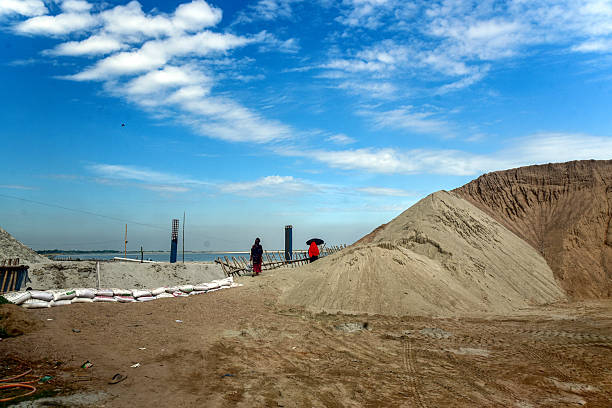
Have you ever ordered sand or gravel for a project and wondered why the amount delivered did not seem to match what you expected? It can happen, especially when we focus only on volume and forget about weight. When searching for bulk sand and gravel near me in California, understanding material density can help us order the right quantity, plan delivery, and avoid spending more than necessary. The good news is that density is not as complicated as it sounds. Once we understand how it works, estimating materials for driveways, concrete work, road bases, and landscaping becomes much easier.
What Does Sand and Gravel Density Actually Mean?
Density tells us how much a material weighs within a certain volume. In simple words, two piles of the same size can weigh quite differently. For example, a pile of dry sand may weigh less than the same volume of damp sand. Gravel can also vary in weight depending on the size of its stones, the spaces between them, and how tightly it has been packed.
This matters because construction materials are often ordered by the cubic yard or by the ton. If we do not understand the difference, our estimate can be off before the work even begins.
Why Does Density Change Between Materials?
Not all sand and gravel behave the same way. Fine sand, coarse sand, crushed gravel, and rounded river gravel can have different densities. Here are a few things that affect their weight:
- Particle size: Smaller particles can fill gaps between larger ones, changing how much material fits into a given space.
- Moisture content: Water adds weight, so wet sand usually weighs more than dry sand of the same volume.
- Compaction: When material is packed down, the air spaces between particles decrease. This affects the volume needed to fill an area.
- Material type: The mineral makeup and shape of the particles can influence overall density.
So, even if two materials look almost identical, we should not assume they will have the same weight or cover the same area.
How Density Affects Material Quantities
Let us say we are preparing a driveway base. We measure the area and decide how thick the gravel layer should be. These measurements give us the volume needed for the job. The basic calculation is straightforward:
Volume = Length × Width × Depth
Make sure all measurements use the same unit. If we measure in feet, we can calculate cubic feet and divide the result by 27 to convert it into cubic yards.
But there is another step if we need to estimate weight. We multiply the volume by the material’s bulk density.
Estimated Weight = Volume × Bulk Density
The density figure must use units that match the volume measurement. Since actual density varies, it is best to ask the supplier for an estimate specific to the material being ordered.
This extra step helps us compare quantities more accurately and understand how much material a delivery truck may need to carry.
How Density Influences Your Project Budget
Material estimates are not just about ordering enough sand or gravel. They also affect transportation costs, labor, and project timing. If we underestimate the quantity, we may need another delivery. That can mean extra charges and workers waiting around for materials. On the other hand, ordering too much leaves us with unused material taking up space and tying up money.
Density also matters when comparing supplier quotes. One supplier may quote by the ton while another quotes by the cubic yard. Before choosing the cheaper option, we need to understand the material type, moisture level, quantity, and delivery charges. A little checking now can save plenty of hassle later.
How Can We Make More Accurate Estimates?
We do not need to make material ordering difficult. A few practical steps can help:
- Measure the project area carefully and confirm the required depth.
- Choose the right sand or gravel for the intended use.
- Ask the supplier for the estimated bulk density and whether the material is sold by weight or volume.
- Allow for compaction and material loss where the project requires it.
- Confirm delivery limits, truck capacity, and any minimum order requirements.
When looking for bulk sand and gravel near me in California, we should share our project measurements with the supplier rather than guessing at the quantity. Their advice can help us plan a more realistic order.
FAQs
1. Is sand heavier than gravel?
Not always. Their weight depends on particle type, moisture, packing, and density. We should compare the specific materials rather than assume one is always heavier.
2. Does wet sand weigh more than dry sand?
Yes, generally. Water adds weight to the sand, even when its volume appears similar. This can affect orders sold by the ton.
3. How do we convert cubic yards of gravel into tons?
Multiply the cubic yards by the gravel’s estimated weight per cubic yard. Ask the supplier for the correct density because different gravel products can have different weights.
4. Why does compaction affect material estimates?
Compaction reduces the spaces between particles, allowing material to occupy less space. A project that needs a compacted layer may require more loose material than the finished dimensions suggest.
5. How can we avoid ordering too much or too little sand and gravel?
Measure the area, confirm the required depth, account for compaction where needed, and check the supplier’s density estimate. These steps help us order a suitable quantity without unnecessary waste.


