


In the landscape of environmental regulations in India today, the EPR Certificate encouraged compliance, and was recently a compliance requirement. Whether you are a manufacturer, importer, brand owner, or distributing plastic or electronic waste, having an EPR certificate on hand is not only good for the environment and required by the government, it is a smart business decision. In this blog, we will examine the benefits of EPR certification, how to register, who has to register for it, and how to apply for it online.
What is an EPR Certificate?
EPR, or Extended Producer Responsibility, is a policy concept where the producers are made responsible for the entire lifecycle of their product, including take-back, recycling and final disposal. The EPR certificate is an official document by the regulatory body (such as the Central Pollution Control Board – CPCB in India) the confirms that your business follow EPR guidelines and protocols.
Who Requires an EPR Certificate?
- Manufacturers of electronic equipment, plastic products, batteries, and packaging materials.
- Importers of products or packaging into India.
- Brand owners that sell products under their own brands.
- Producers from all sectors of the economy that produce products that could become waste.
- All of these businesses are required to meet EPR requirements under Indian law: to protect the earth and its sustainability.
Main Benefits of EPR Certificates:
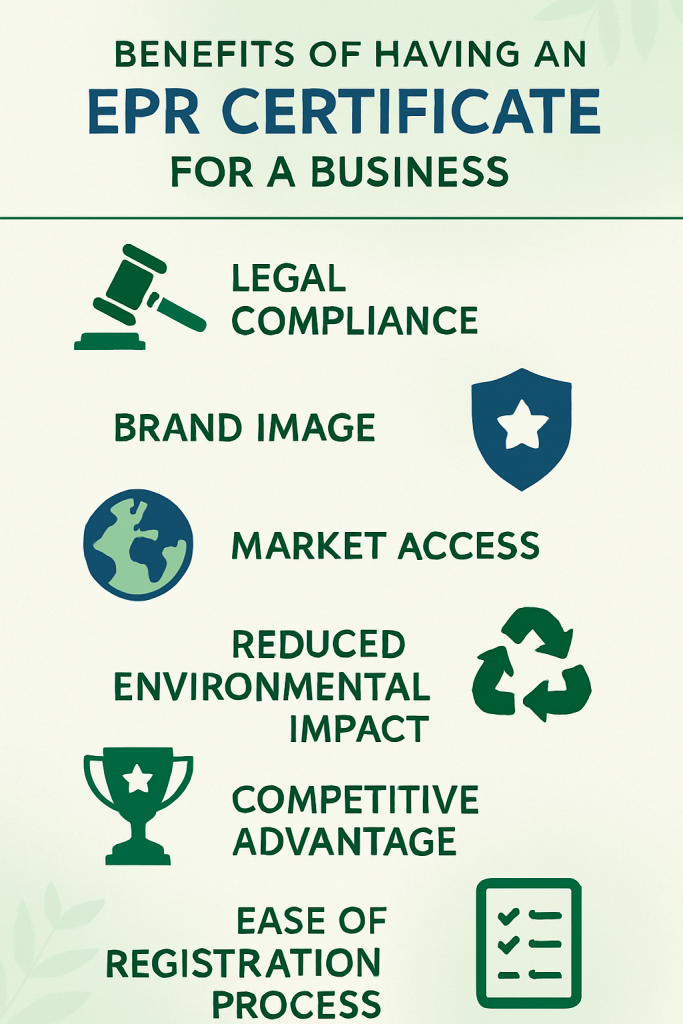
- Compliance: You can be confident that your business is working in accordance with Indian environmental laws, without facing any penalties or legal challenges.
- Image: Increases image and good will with your environmentally conscious customers, demonstrating you care for the environment.
- Market Access: You can sell your regulated products both domestically and abroad, as many markets require proof of compliance before their permission to trade.
- Environmentally Friendly and Sustainability: Helps with good waste management and recycling, having a positive impact on our planet.
- Competitive Advantage: EPR certification is a mark of trust, that may make a difference for your business, even in tendering responses or when dealing with global companies.
- Government: Government procurements now demand proof of EPR registration in order to be included as an eligible bidder.
- Market Entry: Helps with the entry into new markets that require EPR compliance.
EPR Certificate Registration Process
Acquiring an EPR certificate involves many steps:
- Document Preparation- This step involves collecting all the details about your business, GST registration, the products your business sells, records of compliance, etc.
- Online Application Process- Submit your application to the EPR certificate online apply portal on the CPCB or SPCB (State Pollution Control Board) page.
- Assessment- This refers to the authorities various stages of reviewing your application and supporting documents.
Grant of authorization- Once your application has been approved you will receive the EPR authorization India certificate for a defined period.
How to Apply for Online EPR certificate
- Go to the Central Pollution Control Board or State Board portal;
- Complete the business registration and fill out the EPR registration process form
- Upload the relevant documents and pay the required fee;
- Check application status and respond to the authorities if they ask questions;
- After the application has been verified successfully you can download your EPR certificate.
Conclusion
Obtaining an EPR certificate is not just a formality; it’s a commitment to environmental responsibility and organizational excellence. Don’t fall behind; ensure your organization meets all current and future legal, regulatory, and environmental obligations, and prepares for a sustainable future. If you require assistance to obtain or need end-to-end support, JR Compliance is ready to assist you every step of the way.


