

Introduction:
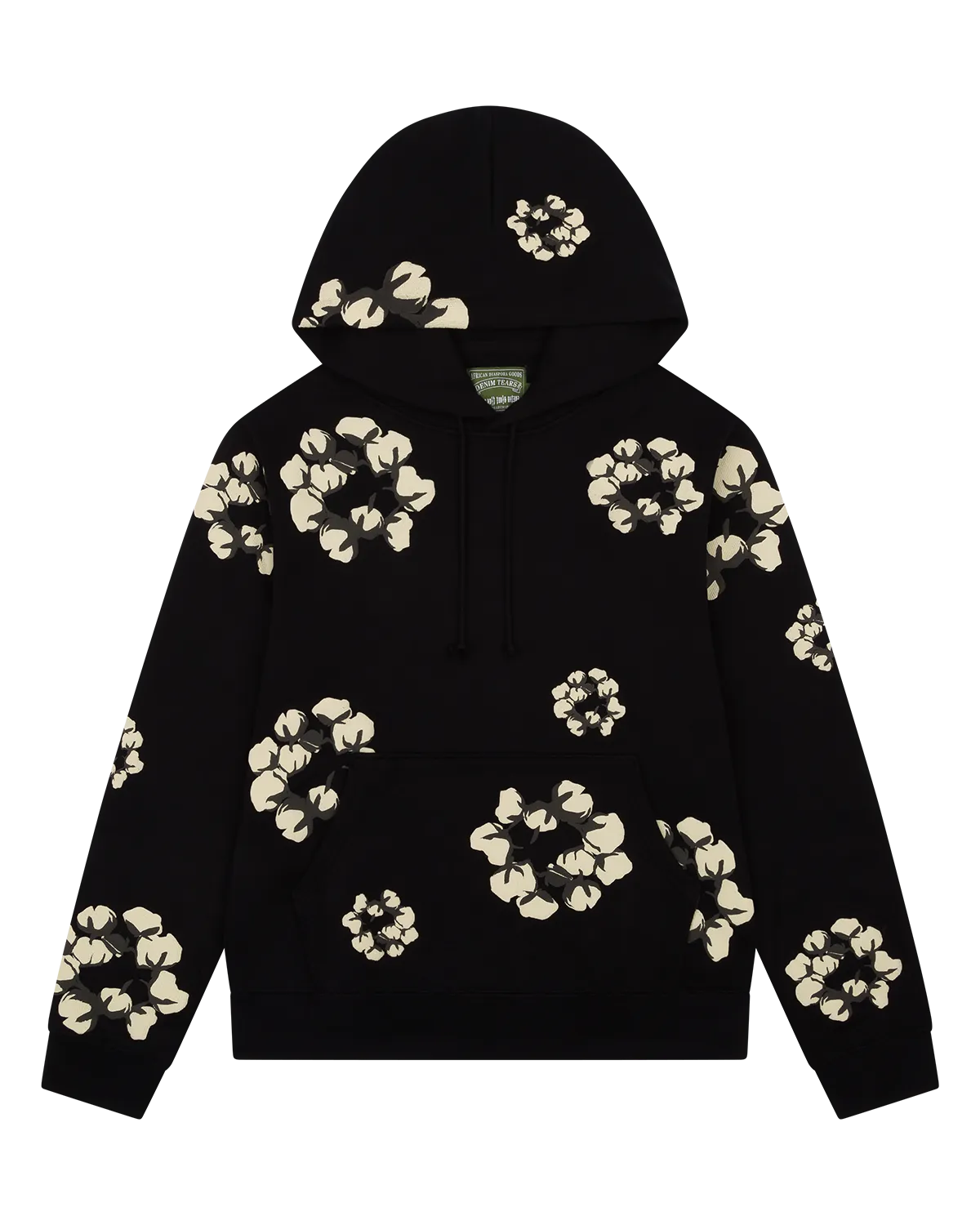
If you’ve spent any time in streetwear circles over the past few years, you’ve seen the cotton wreath. That circular motif—sometimes printed, sometimes appliquéd, occasionally rendered in Swarovski crystals—has become one of the most recognizable graphics in contemporary fashion. But for Tremaine Emory, the founder of Denim Tears, that wreath is far more than a logo. It’s a historical marker, a memorial, and a conversation starter all at once.
Denim Tears isn’t your typical hypebeast label. While many brands chase trends and flip aesthetics for quick sales, Emory has built something different: a fashion house that treats clothing as a Trojan horse for education. Each collection explores the African Diaspora, the Black American experience, and the overlooked stories that shaped this country. The brand launched in 2019—exactly 400 years after the first enslaved Africans arrived in Point Comfort, Virginia—and that timing was no accident.
This article will walk you through everything you need to know about Denim Tears Clothing: its origins, its symbolism, its most important releases, and why it matters in today’s cultural landscape. Whether you’re a longtime collector or you’ve just started noticing those wreaths around town, here’s the full story.
The Man Behind the Brand: Tremaine Emory
From Queens to the Fashion World
Tremaine Emory was born in Atlanta, Georgia in 1981 and raised in Jamaica, Queens, New York. His upbringing in New York City gave him a front-row seat to how people use style to express identity. In his own words, the city was his “first fashion school”.
Before launching Denim Tears, Emory built an impressive résumé across fashion, music, and art. He worked at Stüssy as art director-at-large, served as brand director at Yeezy, and co-founded the creative collective No Vacancy Inn with Ade “Acyde” Odunlami and Brock Korsan. In 2022, he was appointed creative director of Supreme—the first named creative director in the brand’s history since its $2.1 billion acquisition by VF Corp. He stepped down in August 2023, alleging that systemic racism was at play within the company’s structure.
The Origin of the Name
The name “Denim Tears” came from an inside joke. Emory posted a photo of a pair of ripped Levi’s on Instagram, and a friend joked that the denim looked like it was crying. He immediately recognized it as a brand name. But what started as a casual moment evolved into something much deeper, especially once Emory connected the name to the history of cotton and slavery in America.
What Denim Tears Stands For
The Cotton Wreath: More Than a Graphic
The cotton wreath is Denim Tears’ most powerful symbol. Cotton was the textile around which American slavery was built—the crop that enslaved Black people were forced to harvest, generating enormous wealth for a society that denied their humanity. The wreath format transforms that painful history into something that functions as a memorial, a reclamation, and a visual argument about how American history should be remembered.
Emory’s own family history informs this symbolism. His ancestors were enslaved laborers, cotton pickers, and even cotton-field owners. The wreath represents the intertwined past and future experiences of Black Americans, printed and appliquéd on vintage denim and modern silhouettes alike.
The Mission: Education Through Clothing
Denim Tears operates with what Emory describes as a “bridge over the algorithm”. In a world where social media feeds prioritize entertainment over substance, he uses fashion as a way to tell Black stories that aren’t often told through traditional channels. The brand’s collections consistently examine overlooked narratives at the heart of the Black American experience, making history accessible to people who might never encounter it in a classroom.
As the SCAD Museum of Art noted in its retrospective of Emory’s work, Denim Tears “creates educational pathways between Black history and the history of clothing”.
The Collaborations That Built the Brand
Levi’s: The Partnership That Started It All
Denim Tears’ collaboration with Levi’s, which began in 2019, was the first major statement of the brand’s mission. Emory used the partnership to tell the story of the cotton industry in America, applying the cotton wreath to vintage denim silhouettes. The collection was so significant that ensembles from it were eventually acquired by The Metropolitan Museum of Art’s Costume Institute for its permanent collection.
The Levi’s collaboration continued across multiple seasons, with each release exploring different facets of Black history—from Black biker culture to the Mardi Gras Indians of New Orleans.
Converse: Politics and Pan-Africanism
Emory’s work with Converse produced a Chuck 70 project connected to Marcus Garvey and Pan-African colors. The collaboration demonstrated how a familiar sneaker silhouette could become another canvas for storytelling.
adidas: The Next Chapter
Denim Tears is set to launch its first collaboration with adidas in November 2026, taking on two iconic silhouettes: the Superstar 82 and the Stan Smith 80. Exact design details haven’t been revealed yet, but the partnership signals that Emory’s vision continues to expand into new territory.
Lauryn Hill and the SS26 Campaign
For Spring/Summer 2026, Denim Tears released a collection called “Libertas,” inspired by the true history of the Statue of Liberty. The campaign featured legendary musician Lauryn Hill photographed alongside her children, wearing refined versions of the cotton wreath pattern on denim jackets, jeans, and other pieces. The collection explored how a French abolitionist originally created the Statue of Liberty to celebrate the end of slavery, with broken shackles that were later obscured in American versions.
André Leon Talley: Honoring a Fashion Pioneer
Denim Tears’ Fall/Winter 2026 collection pays tribute to André Leon Talley, the first Black male creative director at American Vogue. The 153-piece collection explores Talley’s style and his role in championing Black designers like Phat Farm, Billionaire Boys Club, and Dapper Dan long before mainstream fashion embraced them. It marks the first apparel collaboration officially endorsed by the André Leon Talley Estate.
Denim Tears in Cultural Institutions
The Met’s Permanent Collection
Denim Tears pieces are part of The Metropolitan Museum of Art’s Costume Institute permanent collection. The acquisitions include the Tyson Beckford sweater—a reimagining of a Ralph Lauren knit with David Hammons’ African-American Flag—alongside a Levi’s ensemble and a pair of UGG slippers.
The SCAD Museum Retrospective
In 2026, the SCAD Museum of Art opened “Denim Tears From the Pool of Black Genius,” the first solo exhibition and retrospective dedicated to Emory’s work. The show placed Denim Tears pieces alongside works by artists who inspired him, including Arthur Jafa, Hank Willis Thomas, and David Hammons, underscoring how Emory’s fashion output was always designed to be in conversation with the broader culture.
Why Denim Tears Matters for Streetwear and Beyond
A Different Kind of Hype
Denim Tears has achieved something rare: commercial success without compromising its message. The brand generates “tens of millions” in annual revenue, with sales doubling every year since 2019—all without outside investors. On StockX, Denim Tears sales grew 290% in 2024 compared to the previous year, and products sold for an average of 31% above retail.
Authenticity That Resonates
What sets Denim Tear apart is its authenticity. Emory isn’t performing activism for marketing purposes; he’s telling stories that are deeply personal and historically grounded. As Jonathan M. Square, an assistant professor of Black visual culture at Parsons School of Design, noted, “He’s taken some important stands, he hasn’t played it safe, and sticks to his values”.
In a polarized political climate where many brands avoid controversy, Denim Tears has built its identity around confronting uncomfortable truths. That approach has attracted a loyal customer base that wants to support something meaningful, not just something trendy.
Top 10 FAQs About Denim Tears
1. What does the name Denim Tears mean?
The name originated from a joke about a pair of ripped Levi’s looking like crying denim, but it evolved to reference the cotton industry and the pain of slavery.
2. Who founded Denim Tears?
Tremaine Emory, a designer from Queens, New York, founded the brand in 2019.
3. What is the cotton wreath symbol?
It represents the cotton plant’s role in American slavery and honors the enslaved people who were forced to harvest it.
4. When did Denim Tears launch?
The brand launched in 2019, exactly 400 years after the first enslaved Africans arrived in America.
5. Where can I buy Denim Tears?
You can shop online at denimtearsclothing.com or visit the African Diaspora Goods flagship stores in New York and Atlanta.
6. Is Denim Tears part of Supreme?
No. Tremaine Emory was Supreme’s creative director for about 18 months, but Denim Tears is an independent brand he founded and owns.
7. What makes Denim Tears different from other streetwear brands?
It focuses on telling overlooked stories from Black American history and the African Diaspora, using clothing as a vehicle for education.
8. Has Denim Tears collaborated with adidas?
Yes, Denim Tears is launching its first adidas collaboration in November 2026 with the Superstar 82 and Stan Smith 80.
9. Is Denim Tears in any museums?
Yes. Denim Tears pieces are in The Met’s Costume Institute permanent collection and were featured in a solo retrospective at the SCAD Museum of Art.
10. What is the Tyson Beckford sweater?
It’s a Denim Tears knit that reimagines a classic Ralph Lauren design with David Hammons’ African-American Flag instead of the American flag.
Conclusion:
Denim Tears represents something increasingly rare in fashion: a brand with a genuine point of view. Tremaine Emory isn’t just designing clothes; he’s building a bridge between past and present, between Black history and contemporary culture, between the algorithm and real human stories. The cotton wreath isn’t a logo you wear to signal status—it’s a symbol that carries the weight of centuries.
For American audiences especially, Denim Tears offers a way to engage with difficult history through objects we use every day. When you put on a Denim Tears hoodie or a pair of those Levi’s jeans, you’re participating in a conversation that extends far beyond fashion. You’re wearing a story. And in a world of endless content and forgettable trends, that’s something worth holding onto.


