

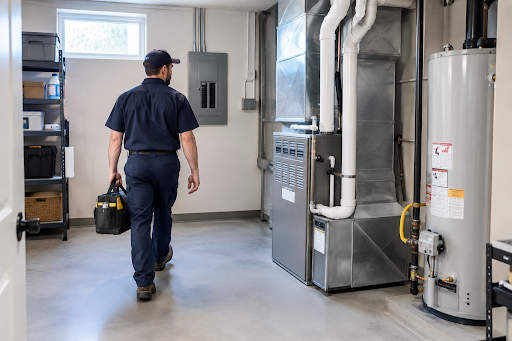
Heat pumps get a bad rap in cold places, and honestly some of it’s deserved. A lot of people still think they just quit once it freezes. That’s old thinking, mostly, but it does depend on whether yours has been looked at.
So here’s the deal. Proper heat pump maintenance in Colorado springs isn’t complicated, it’s just stuff people forget until the first cold snap shows up and the house won’t warm past 62. Most of what goes wrong in winter was sitting there since summer, a dirty coil, a clogged filter, a low charge nobody noticed because the AC side seemed fine. Check it now, while it’s 60 out, and you skip the cold house drama.
What Should You Check First on a Heat Pump?
Start with this list, most important first:
- Air filter, swap it if it’s grey or fuzzy
- Outdoor unit, clear leaves, debris, anything blocking airflow
- Thermostat, confirm it actually switches to heat mode and responds
- Emergency and auxiliary heat settings, know what they do
- Strange noises or smells on a test run
- Ice or frost patterns on the outdoor unit
Filter, outdoor unit, and thermostat are the big three. Do those today and you’ve already dodged the most common winter heat pump calls we get.
Why Does the Outdoor Unit Need So Much Attention?
The outdoor unit pulls heat from outside air, so anything blocking airflow hurts it directly. Leaves, dirt, and snow buildup reduce performance fast. Keep a couple feet of clear space around it, and lift it off the ground if snow tends to pile there.
Here in Colorado Springs snow can stack up overnight, then melt and refreeze. Check it after storms, not just once in October. A unit buried in ice is working way harder than it should.
Is Frost on a Heat Pump Normal?
Some frost is normal. Heat pumps run a defrost cycle that melts buildup, and you might see steam or hear a whoosh when it kicks in. A thick block of ice that doesn’t clear is not normal and usually means a defrost or airflow problem.
People panic at the steam, which is understandable, it looks alarming. It’s usually just the unit doing its job. But if ice keeps growing and the heat’s weak, shut it down and call someone.
Know What Emergency Heat Actually Is
Emergency heat is a backup mode that uses electric resistance heating instead of the heat pump itself. It works, but it costs a lot more to run. If your thermostat is stuck on it, your bill will show it.
Auxiliary heat is different, it kicks in automatically to help during really cold stretches or when the system’s defrosting. Know which one you’re looking at on that thermostat screen, because mixing them up is how people get a shocking January bill and no idea why.
The Winter Checklist for Heat Pumps, Homes and Businesses
Here’s what a solid pre-winter visit should cover. Not every item applies to every building, but a good tech walks through all of it.
Boiler and Heat Exchanger Safety Checks. If your heat pump is paired with a gas furnace as backup, a dual-fuel setup, the heat exchanger needs checking for cracks. Same goes for any boiler in a commercial building. Carbon monoxide risk isn’t something to guess on.
Full System Inspection. Electrical connections, refrigerant charge, reversing valve, motors, and controls. A heat pump has a lot of moving parts, and low refrigerant quietly kills its heating performance.
Ductwork and Zoning Inspection. Leaky ducts waste heat, and in bigger buildings one blocked zone can leave an entire section cold.
Rooftop Unit (RTU) Winterization. Plenty of commercial buildings run rooftop heat pumps. Those need drainage, insulation, and controls checked before they freeze up or stick.
Backup/Redundancy Planning. If you run a business that can’t go cold, decide now what your backup is. A heat pump failing at 6am with customers coming in is not the time to figure it out.
Filter Replacement Across All Units. Every unit in the building, not just the easy one. One clogged filter drags down the whole system.
When Should You Call a Pro Instead of DIY?
Call a pro if you see ice that won’t clear, hear grinding, smell burning, or notice weak heat even with a clean filter. Refrigerant and electrical work aren’t homeowner jobs. Filters, debris, and thermostat checks are fine to do yourself.
This is where a good hvac contractor in Colorado springs earns the fee. They’ll find the real cause instead of guessing, and they’ll know how heat pumps behave at this altitude, which matters more than people realize.
Do Heat Pumps Really Work in a Colorado Winter?
Yes, modern cold-climate models handle freezing temperatures well, and many homeowners here run them as their main heat. The catch is that they need to be properly sized, installed, and maintained. A neglected one will struggle, a cared-for one won’t.
We’ve seen both ends. A well-tuned system that keeps a house comfortable all winter, and a five-year-old unit that never got serviced and dies the first real cold week.
FAQ: Heat Pumps and Colorado Winters
Q: What hvac services Colorado Springs homeowners need for a heat pump before winter?
A filter change, coil cleaning, refrigerant check, defrost cycle test, and thermostat verification. A full inspection once a year catches small problems before they turn into cold-weather breakdowns.
Q: How do I find an hvac contractor in Colorado Springs, CO for heat pump work?
Check licensing, insurance, and specific heat pump experience. Read reviews describing real jobs and get written estimates. Local altitude and cold-weather experience should be a requirement, not a bonus.
Q: Do furnance vents commercial residential building setups affect heat pump performance?
Yes. Blocked or leaky vents cut airflow and make the system work harder. Commercial buildings have more vents and zones, so problems spread faster than in a typical house.
Q: Are all hvac companies in Colorado experienced with heat pumps?
No. Some focus on furnaces and AC. Ask directly about cold-climate heat pump experience before hiring, especially if you run a business that can’t afford downtime.
Wrapping It Up
Heat pumps can handle a Colorado winter just fine, they just need a little attention first. Filter, outdoor unit, thermostat, a quick look at emergency heat settings, and a proper inspection from someone who knows the area. That’s most of it.
Staying on top of heat pump maintenance in Colorado springs now beats scrambling in January, and a solid hvac contractor in Colorado springs can walk through the whole checklist in one visit. HVAC SOLUTIONS handles maintenance and emergency calls for homeowners and commercial customers alike. If you want your system checked before the first hard freeze, call +1 (719) 548-8880.


