

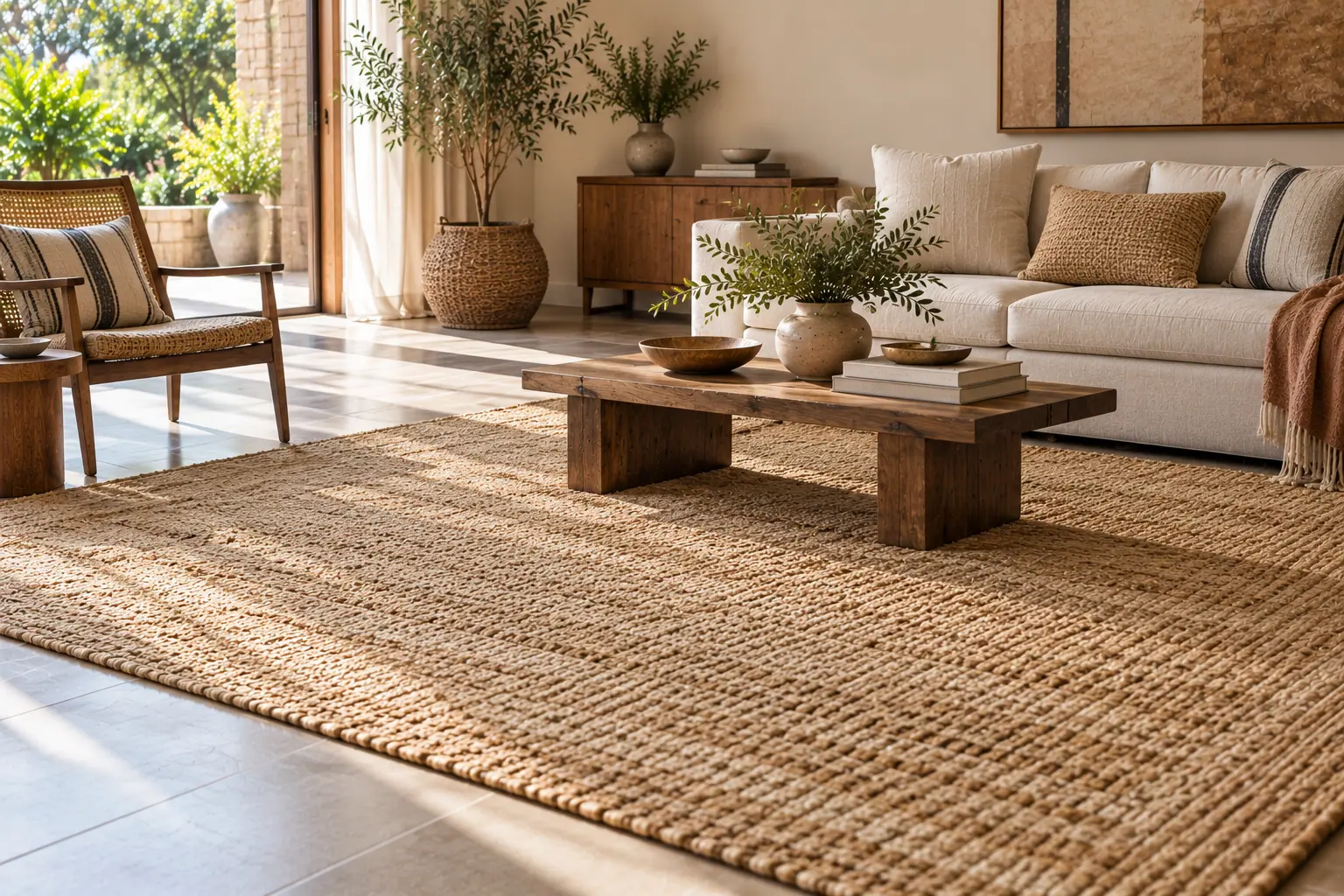
Natural flooring does not always mean choosing one fibre and using it throughout an interior. Modern floorcovering design increasingly looks at how different materials can work together to create a particular combination of texture, appearance and everyday performance.
JUTE MIX Floorcovering is an example of this approach.
By combining jute with another fibre or material, a blended floorcovering can offer a different visual and tactile experience from a product made entirely from one fibre. Depending on its construction, a jute mix can introduce natural texture while providing characteristics that may be difficult to achieve with a single material.
For homeowners, designers and businesses considering natural flooring, understanding why fibres are mixed can make the selection process much easier.
What Does Jute Mix Mean?
The term “jute mix” broadly refers to a floorcovering that incorporates jute alongside another fibre or material.
The exact composition can vary considerably between products.
One product may combine jute with another natural fibre, while another may use jute alongside a different material to influence durability, texture, colour or construction.
This means the name alone does not tell you everything about how the flooring will perform.
The product specification is important.
Before selecting a jute mix floorcovering, it is worth understanding the fibre composition, backing, construction, recommended applications and care requirements.
Why Combine Different Fibres?
Different fibres have different characteristics.
Jute is valued for its natural appearance and distinctive texture.
Another fibre may contribute additional softness, structure, resilience or visual variation.
Combining them allows manufacturers to create a floorcovering with a particular balance.
This is similar to other areas of interior design where materials are combined rather than used individually.
A timber table may incorporate metal.
A wool fabric may contain another fibre.
A stone surface may be paired with timber cabinetry.
The objective is not necessarily to make one material better than another. It is to combine useful characteristics in a single finished product.
The Visual Character of Jute
Jute has a recognisable natural appearance.
Its fibres create a woven texture that can make a floor look more organic and tactile than a completely uniform synthetic surface.
This is particularly useful in interiors where natural materials are already being used.
Timber flooring, stone, linen, leather and indoor plants can all work naturally with jute.
A jute mix can retain this natural character while introducing a different texture or appearance through the second material.
Jute Mix in Contemporary Homes
Modern Australian homes often use relatively restrained colour palettes.
White walls, timber cabinetry, neutral upholstery and natural stone are common design elements.
A completely plain floor can sometimes make such a room feel visually incomplete.
A textured jute mix floorcovering can provide another layer of detail without requiring a strong colour or decorative pattern.
This makes it particularly suitable for interiors where texture is more important than visual drama.
Living Rooms and Open Spaces
Living rooms are often where flooring has the greatest influence on the overall appearance of a home.
Furniture is usually arranged around a central seating area, and the floor occupies a substantial portion of the visible space.
A natural jute mix can create a foundation for the furniture without competing with it.
In an open-plan home, the same floorcovering can also help connect living and dining areas.
Furniture and rugs can then establish individual zones.
This creates visual organisation without introducing physical walls.
The Importance of Proportion
Flooring can change the apparent proportions of a room.
A strongly patterned material can make the floor visually dominant.
A neutral natural texture tends to have a quieter effect.
This makes jute mix floorcoverings useful in interiors where furniture, artwork or architectural features are intended to remain the primary focus.
However, the size and layout of the room still matter.
A small room with a highly textured floor may feel different from a large open-plan room using the same material.
Samples should therefore be considered in relation to the complete space.
Bedrooms and Private Areas
Bedrooms often benefit from natural textures because they contribute to a softer visual environment.
A jute mix floorcovering can work alongside timber beds, linen bedding and neutral walls.
The material doesn’t have to dominate the room.
Instead, it can provide a subtle textural foundation.
For bedrooms, comfort underfoot may also be important, so the construction and underlay should be considered along with the fibre composition.
Home Offices
The growth of home working has created a need for flooring that can bridge residential comfort and professional functionality.
A jute mix floorcovering can help a home office feel integrated with the rest of the property.
A timber desk, neutral chair and natural flooring can create a professional environment without making the room feel overly corporate.
However, office chairs with wheels need special consideration.
Repeated movement in a concentrated area can create wear that differs from normal foot traffic.
The specific product should therefore be checked for suitability before installation.
Jute Mix Versus Jute Rugs
A Jute Rug and a jute mix floorcovering serve different purposes.
A rug is generally used to define an area or create a decorative layer.
A floorcovering can provide a much broader and more consistent surface.
This distinction can influence how the material is used.
A homeowner may use jute rugs to define seating areas while using another natural floorcovering throughout the rest of the room.
Alternatively, a jute mix floor can become the primary surface, with smaller rugs added where additional visual definition is needed.
Creating Zones Without Walls
Open-plan interiors can sometimes feel difficult to organise.
Without walls separating the kitchen, dining and living areas, the entire room can appear to become one large space.
Flooring can help establish visual boundaries.
A consistent natural floor can provide continuity, while rugs and furniture identify individual areas.
Alternatively, different flooring materials can be used strategically where the architecture allows.
Jute mix floorcovering can contribute to this approach because its texture is noticeable without necessarily becoming visually overpowering.
Combining Jute with Other Natural Materials
One of the strengths of jute is its compatibility with other natural materials.
It can work alongside:
- Timber
- Wool
- Linen
- Leather
- Stone
- Rattan
- Ceramic
- Natural fibre rugs
The goal is not to make everything look identical.
Contrast can actually make an interior more interesting.
A textured jute mix floor can sit beneath a smooth leather sofa, while a timber coffee table introduces another natural surface.
The different textures become part of the design.
Natural Flooring Doesn’t Need to Look Rustic
Natural materials are sometimes associated with rustic or country-style interiors.
That perception is increasingly outdated.
A jute mix can look highly contemporary when combined with modern furniture, clean architectural lines and restrained colours.
The surrounding design determines the overall character.
The same floorcovering can look relaxed in one home and sophisticated in another.
This versatility is one reason natural flooring continues to appear in contemporary interior projects.
Considering High-Traffic Areas
Flooring selection should always begin with the intended use of the space.
A quiet bedroom is very different from an entrance hall.
A private study is different from a commercial reception area.
A busy family room has different requirements from a guest bedroom.
Jute mix products can vary significantly in their construction and performance, so the recommended application should be checked carefully.
The fact that a product contains natural fibre does not automatically determine whether it is suitable for a particular traffic level.
Maintenance Requirements
Every floorcovering requires maintenance, but natural materials can have specific care requirements.
Regular vacuuming can help remove dust and grit.
Furniture should be moved carefully rather than dragged.
Spills should be dealt with promptly using a method appropriate for the product.
Excessive moisture and unsuitable cleaning chemicals can cause problems with some natural fibre floorcoverings.
Always follow the manufacturer’s cleaning and maintenance recommendations.
This is especially important where the flooring is installed over a large area and replacement would be disruptive.
Understanding Natural Variation
A jute-based floorcovering may display subtle differences in colour and texture.
These variations can be more noticeable than they would be in a completely synthetic floor.
For many people, this is part of the appeal.
Natural variation gives the floor an organic character and prevents it from looking mechanically uniform.
However, homeowners should understand this characteristic before ordering.
A sample provides an indication of the material, but the final installed floor may have natural variation across the broader area.
Jute Mix in Commercial Interiors
Natural flooring can contribute to the identity of commercial spaces.
A boutique office, design studio, consulting room or hospitality environment may benefit from materials that make visitors feel more comfortable.
A jute mix can provide a less institutional appearance than some conventional commercial floorcoverings.
However, commercial applications require more detailed assessment.
Foot traffic, cleaning schedules, furniture movement and maintenance access all need to be considered.
A material suitable for a small office may not be appropriate for a busy public environment.
Custom Applications
Not every space fits neatly into standard dimensions.
Large open-plan rooms, unusual architectural layouts and commercial spaces may require more careful planning.
Custom Rugs can provide a solution where a defined area needs a specific size.
For broader floorcovering projects, the layout and installation plan should similarly be considered before the material is ordered.
Measurements should include doors, permanent cabinetry, furniture placement and transitions to other flooring.
Good planning can make a significant difference to the finished result.
Comparing Jute Mix with Other Natural Flooring
Natural flooring offers many alternatives.
Natural SISAL Floorcovering can provide a different, generally firmer textural appearance.
Seagrass Carpets have their own distinctive woven character.
Abaca Rugs can introduce another type of natural texture.
Natural COIR Floorcovering may be considered for particular applications where a robust natural fibre is required.
Natural JUTE & WOOL Carpets provide another approach by combining plant and animal fibres.
The important thing is not to identify one material as universally suitable.
Each flooring type has its own characteristics and should be considered according to the environment.
Sustainability Considerations
Jute is a renewable plant-based fibre, which contributes to its appeal among people interested in natural materials.
However, a responsible flooring decision should consider the complete product.
Backing materials, manufacturing, transportation, installation and expected lifespan can all influence environmental impact.
A floor that remains useful for a long period can reduce the frequency of replacement.
Care and maintenance therefore form part of the sustainability discussion.
Making the Right Decision
Before choosing a jute mix floorcovering, consider four broad areas.
First, think about the room.
Where will the floor be installed?
Second, consider traffic.
How many people use the space and how frequently?
Third, consider maintenance.
Can the required care realistically be incorporated into the property’s routine?
Finally, consider design.
Does the colour, texture and construction complement the furniture and architecture?
These questions are more useful than simply choosing a floor because it looks attractive in a photograph.
Looking at Flooring as Part of the Interior
The floor should be considered alongside the entire room.
Wall colours, furniture, lighting, curtains and decorative objects all interact with it.
A jute mix floorcovering can provide a natural base, but its final appearance depends heavily on what surrounds it.
This is why samples should ideally be viewed in the actual environment.
Natural daylight can reveal different tones from artificial lighting, while surrounding colours can change how the floor is perceived.
Floorspace JUTE MIX Floorcovering offers an interesting approach to natural flooring by combining jute with another material or fibre to achieve a particular balance of texture, appearance and practical characteristics. Its natural visual quality can work particularly well in contemporary Australian interiors, including living areas, bedrooms, studies and selected commercial spaces. The most important consideration is to understand the specific composition and recommended application of the product rather than assuming that every jute mix will perform in the same way.
For homeowners, designers and businesses across Melbourne and surrounding suburbs, Floorspace offers a range of natural flooring solutions, including JUTE MIX Floorcovering, Sisal, Jute, Seagrass, Abaca and other natural fibre options. Selecting flooring according to the room, traffic level, maintenance requirements and overall design can help create an interior that feels both natural and thoughtfully planned.


