

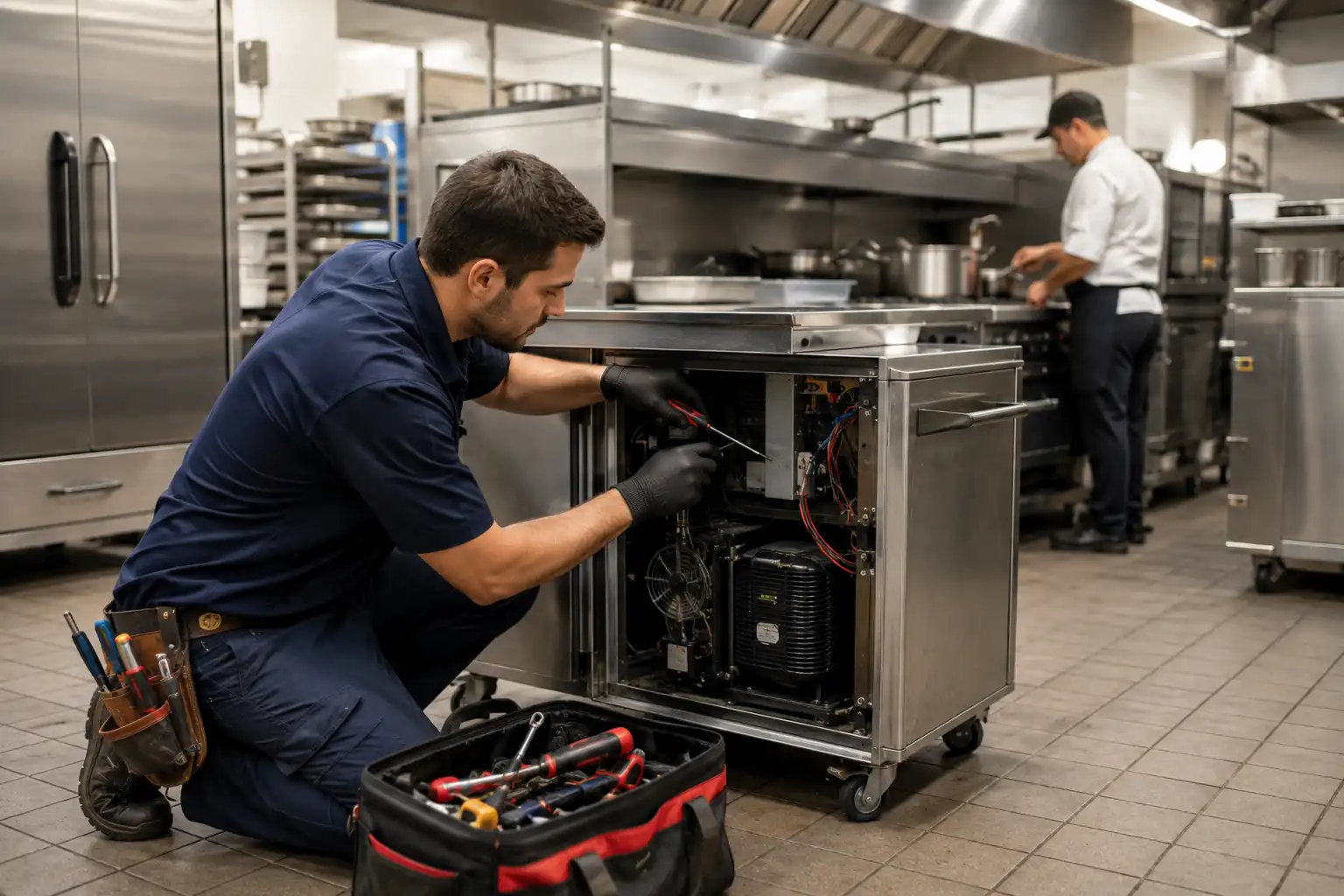
Commercial kitchens rely on their equipment every day. Restaurants, cafés, hotels, schools, hospitals, catering companies, and other food service businesses need reliable appliances to prepare food, store ingredients, clean dishes, and serve customers efficiently. When one important piece of equipment stops working, it can quickly affect the entire operation.
Professional commercial kitchen appliance repair can help businesses identify equipment problems, restore performance, and reduce unnecessary downtime. Knowing the common signs of equipment failure can also help kitchen managers decide when professional service is needed.
Why Is Professional Commercial Kitchen Appliance Repair Important?
Commercial kitchen equipment is built for demanding environments. Unlike residential appliances, commercial units may operate for long hours and handle heavy workloads every day. This constant use can eventually lead to worn components, electrical problems, temperature issues, leaks, or other performance concerns.
A small problem can become more serious if it is ignored. For example, a refrigerator that is struggling to maintain temperature may eventually affect food inventory, while a dishwasher that does not clean or drain properly can slow down the entire kitchen.
Professional technicians can inspect the equipment, identify the underlying issue, and determine whether a repair, component replacement, or further maintenance is needed.
What Are the Most Common Commercial Kitchen Equipment Problems?
Commercial kitchens use many different appliances, and each type can develop its own problems. Refrigeration equipment, cooking appliances, dishwashers, ice machines, and HVAC systems all require proper care to maintain reliable performance.
Are Your Commercial Refrigerators Not Cooling Properly?
Commercial refrigerators and freezers need consistent temperatures to protect food and ingredients. If the temperature begins to fluctuate, the equipment may be experiencing a problem with airflow, condenser coils, door seals, thermostats, electrical components, or the refrigeration system.
A refrigerator that runs continuously, produces excessive frost, makes unusual sounds, or develops water around the unit should be inspected. Addressing these warning signs early may help prevent food spoilage and more expensive equipment damage.
Why Is Your Commercial Ice Machine Not Making Enough Ice?
Ice machines are essential for many restaurants, hotels, bars, healthcare facilities, and other businesses. When an ice machine slows down or stops producing ice, it can affect normal service and create unnecessary delays.
Low ice production can be related to restricted water flow, mineral buildup, dirty components, condenser issues, temperature problems, or faulty controls. Professional ice machine repair can help identify the actual cause instead of simply treating the symptoms.
Regular cleaning and maintenance are also important. Mineral deposits, dirt, and scale can affect machine performance and may contribute to reduced ice production or other operating problems.
What Problems Can Affect Commercial Ovens and Ranges?
Commercial ovens and ranges operate under demanding conditions, especially during busy kitchen hours. Problems with heating elements, burners, ignition systems, thermostats, controls, or other components can affect cooking temperatures and preparation times.
If an oven takes longer than usual to heat, does not maintain the selected temperature, or cooks food unevenly, professional inspection may be necessary.
Gas-powered equipment requires particular care. If there is an issue with ignition, gas flow, or another gas-related component, kitchen staff should not attempt complex repairs themselves. A qualified technician can inspect the equipment and determine the appropriate solution.
Can a Commercial Dishwasher Affect Kitchen Operations?
Yes. A commercial dishwasher plays an important role in keeping dishes, cookware, and utensils ready for continued use. If the dishwasher does not drain properly, clean effectively, maintain the required temperature, or complete its cycles, kitchen operations can slow down.
Other food preparation equipment can also experience problems because of frequent use. Mixers, slicers, warming equipment, and similar appliances may develop mechanical or electrical issues over time.
Regular inspections can help identify worn components before they cause an unexpected breakdown during a busy service period.
When Should You Search for Commercial AC Repair Near Me?
Commercial kitchens generate significant heat from ovens, ranges, fryers, dishwashers, and other equipment. If the air conditioning system is not working properly, the kitchen can quickly become uncomfortable for employees and difficult to manage.
When searching for commercial ac repair near me, businesses should consider a service provider with experience working in commercial environments. Commercial HVAC equipment often has different requirements than residential systems and may need specialized troubleshooting.
Common signs that a commercial AC system may need professional attention include poor cooling, weak airflow, frequent cycling, unusual sounds, unexpected odors, water leaks, or indoor temperatures that remain too high.
Timely service can help restore comfortable operating conditions and may prevent a smaller HVAC problem from developing into a larger repair.
How Can Preventive Maintenance Reduce Equipment Problems?
Waiting until an appliance completely stops working can create unnecessary stress for a commercial kitchen. Preventive maintenance gives technicians an opportunity to inspect equipment, clean important components, check connections, identify wear, and evaluate overall performance.
Every appliance has different maintenance requirements. Businesses should follow manufacturer recommendations and consider how frequently each piece of equipment is used. A busy restaurant kitchen may require more frequent attention than equipment used only occasionally.
Keeping maintenance and repair records can also be helpful. These records allow technicians to identify recurring problems and understand the service history of each appliance.
What Warning Signs Should Kitchen Managers Watch For?
Commercial equipment often provides warning signs before a complete failure. Changes in temperature, unusual noises, leaks, strange odors, slower performance, and frequent cycling should not be ignored.
For refrigeration equipment, rising temperatures or excessive frost can indicate a developing problem. For cooking equipment, uneven heating or longer heating times may signal component issues. Ice machines may show reduced production, while dishwashers may struggle with cleaning or drainage.
Reporting these changes early gives a technician an opportunity to investigate the problem before it becomes a major disruption.
How Can Professional Repair Help Reduce Kitchen Downtime?
When commercial equipment stops working, a temporary solution may not address the real problem. Professional repair focuses on identifying why the equipment failed and determining the appropriate way to restore it.
A technician may inspect electrical components, controls, motors, temperature settings, airflow, water supply, refrigeration components, or other equipment-specific parts. After identifying the issue, the technician can explain the repair options.
Sometimes replacing a worn component is enough to restore normal operation. In other cases, an older appliance with repeated failures may be approaching the end of its useful service life. A professional evaluation can help a business decide whether repair or replacement makes more sense.
How Should You Choose a Commercial Kitchen Repair Provider?
Businesses should consider experience, service availability, response time, and familiarity with commercial equipment when selecting a repair provider.
A reliable service provider should be able to explain the problem clearly and provide practical recommendations. It can also be helpful to work with a company that understands multiple types of commercial equipment, especially if the business depends on refrigeration, HVAC systems, ice machines, cooking equipment, and other appliances.
Establishing a relationship with a trusted service provider before an emergency occurs can make it easier to respond when equipment suddenly fails.
Final Thoughts
Commercial kitchen equipment plays a major role in daily food service operations. Refrigerators, freezers, ovens, ranges, dishwashers, ice machines, and HVAC systems all need to perform reliably to keep a business running smoothly.
Regular maintenance and timely commercial kitchen appliance repair can help reduce unexpected downtime, protect food inventory, and support efficient kitchen operations. Paying attention to early warning signs and arranging professional service when problems appear can help prevent a small equipment issue from turning into a larger business disruption.
FAQs
What Does Commercial Kitchen Appliance Repair Include?
Commercial kitchen appliance repair can cover many types of equipment, including refrigerators, freezers, ovens, ranges, dishwashers, ice machines, warming equipment, and other commercial appliances. A technician can inspect the equipment, identify the source of the problem, and recommend the appropriate repair.
When Should I Look for Commercial AC Repair Near Me?
You should consider professional service when your commercial AC is not cooling properly, airflow is weak, temperatures remain high, or the system produces unusual sounds or odors. Getting the problem checked early can help restore comfortable working conditions and reduce the possibility of additional equipment issues.
Why Is My Commercial Ice Machine Producing Less Ice?
Reduced ice production can result from restricted water flow, mineral buildup, dirty components, condenser problems, temperature issues, or faulty parts. A professional technician can inspect the machine and determine which component or condition is affecting its performance.
How Often Should Commercial Kitchen Equipment Be Maintained?
Maintenance frequency depends on the type of equipment, manufacturer recommendations, operating conditions, and how heavily the appliance is used. Commercial kitchens with equipment that operates for long hours may benefit from more frequent inspections and maintenance.
Should I Repair or Replace My Commercial Kitchen Appliance?
The right choice depends on the appliance’s age, condition, repair cost, frequency of breakdowns, and expected remaining service life. A professional technician can assess the equipment and help determine whether repairing the existing appliance or replacing it would be the more practical long-term option.


