

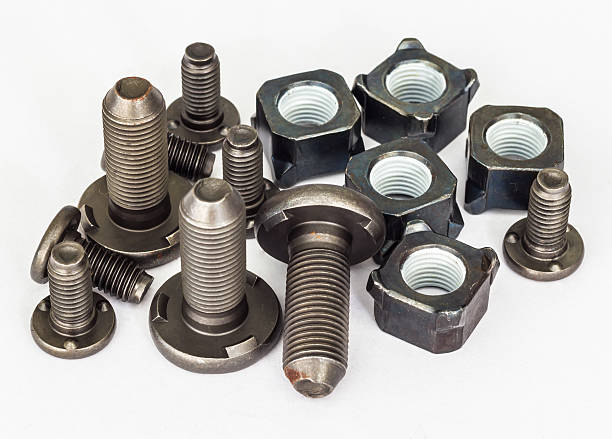
Most people don’t give much thought to a screw, nut, or bolt until one fails. Then suddenly, that little piece of metal becomes a very big deal. A loose connection can stop equipment, damage other components, or create a safety issue. This is one reason modern screw nut & bolt manufacturing has become so focused on precision and process control. Making a fastener isn’t just about shaping metal anymore. The material, machine settings, thread quality, heat treatment, finishing, and inspection can all affect how that part behaves after it leaves the factory. And yes, the tiny details matter more than you’d think.
Better Machines, Fewer Unwanted Surprises
Older manufacturing methods can still have their place, but modern production equipment gives manufacturers much more control. CNC machines, automated systems, precision tooling, and computer-guided production can repeat the same operation again and again without constantly relying on someone to eyeball a measurement. That’s a big deal when thousands of fasteners are involved. Still, a machine doesn’t magically make a perfect part. Someone has to program it. Someone has to choose the tooling. Material needs to be checked, and machines need to be set up properly. If the setup is wrong, a very expensive machine can produce a very consistent batch of wrong parts. That’s the bit people sometimes forget. Advanced manufacturing works best when good equipment is backed by people who actually understand the process.
The Metal You Start With Makes a Difference
There isn’t one material that works for every fastener. A bolt used around heavy machinery may need different properties from one used in an automotive component or an outdoor assembly. Strength is important, sure, but it isn’t the only thing on the list. The fastener may have to deal with moisture, vibration, repeated loading, heat, or corrosive substances. So manufacturers have to think about the material before production even starts. Carbon steel, stainless steel, alloy steel, brass, and other materials each behave differently during forming and machining. Then comes processing. Cold forming can shape certain fasteners efficiently, while CNC machining may be needed for more detailed parts. Heat treatment can change hardness and strength. Surface treatments can provide additional protection. None of this is just decoration. The manufacturing route has a direct connection to how the finished fastener performs.
Small Dimensional Errors Can Cause Real Problems
A fastener doesn’t need to be wildly out of specification to cause trouble. Sometimes the difference is tiny. A thread that’s slightly off can make assembly difficult. A diameter that’s not quite right can create a poor fit. And when a part is being installed by automated equipment, there isn’t always a person standing there to compensate for a bad component. This is where tighter manufacturing control earns its keep. CNC turning, precision forming, and other modern processes allow manufacturers to hold important dimensions much more consistently. The head, shank, threads, grooves, shoulders, and other features can all be produced according to the required drawing. It might sound a little obsessive. But in production, consistency saves headaches. Nobody wants a worker standing at a bench trying to figure out why one batch of bolts fits and another doesn’t.
Why a Turned Parts Manufacturer Can Be Important
Some fasteners are pretty basic. Others aren’t. When a component has several diameters, shoulders, grooves, special thread areas, or unusual geometry, standard production methods may not be enough on their own. This is where a skilled turned parts manufacturer can become useful. CNC turning is particularly suited to parts with cylindrical features that need accurate dimensions. The process can remove material in a controlled way and produce repeatable results across a production run. For custom fasteners, that flexibility matters. And there is more to it than putting a piece of metal into a lathe. The manufacturer has to understand the engineering drawing, tolerances, material, tooling, and inspection requirements. A good setup can make production smooth. A bad one can create scrap at a surprisingly fast rate. Nobody likes discovering that after half the order has already been made.
Quality Checks Aren’t Just a Final Step
Inspection used to be something people often thought of as the last stage. Make the parts, then check them. Modern manufacturing is a little more involved than that. Measurements may be taken during production to make sure dimensions aren’t drifting. Threads can be checked with suitable gauges. Depending on the application, manufacturers may also verify hardness, surface condition, material properties, and other requirements. More advanced inspection equipment can pick up dimensional issues that aren’t obvious to the eye. That’s important because a fastener can look perfectly fine and still fail a specification. It may have a thread issue, a dimensional problem, or a material concern that you simply can’t spot by holding it in your hand. Catching something early is usually much cheaper than finding it after the whole batch has been completed.
Consistency Is a Bigger Deal Than It Sounds
Imagine ordering 20,000 custom bolts. You don’t want the first few hundred made to one standard and the rest gradually wandering away from it. Sounds ridiculous, but production variation can happen if processes aren’t properly controlled. Modern equipment helps manufacturers repeat a proven process with far less variation. Tooling can be monitored. Machine settings can be documented. Production data can be checked. Maintenance schedules can help prevent equipment from slowly falling out of condition. Of course, there will always be some variables. Cutting tools wear down. Materials aren’t always identical. Machines need attention. That’s normal manufacturing life. The point isn’t to pretend variation doesn’t exist. It’s to keep it under control before it becomes a quality problem.
Demanding Jobs Need More Than a Decent-Looking Fastener
A fastener used in a light-duty product and one used in industrial equipment don’t necessarily face the same demands. One might sit quietly for years. Another could deal with constant vibration and repeated loading every day. For those demanding applications, manufacturers may need to consider tensile strength, fatigue resistance, corrosion protection, thread accuracy, and surface condition. These things work together. A strong bolt with poor threads isn’t suddenly a great fastener. Finishing matters too. Depending on the environment, coatings or other surface treatments can help protect against corrosion. But the finish has to suit the application. If it affects thread dimensions or the way mating components fit together, it can create another problem instead of solving one. So, yes, there are a lot of details hiding inside what looks like a very simple part.
Technology Helps, But People Still Matter
There is a tendency to talk about advanced manufacturing as if robots and CNC machines do everything. They don’t. Not really. Someone still needs to read the drawing and understand what the engineer actually specified. Someone has to select the right material and machining method. Tooling needs to be chosen. Measurements need to be interpreted. When something starts going wrong, experience often helps identify the reason before the issue spreads across an entire production run. Different metals also behave differently. Stainless steel can machine differently from carbon steel. Specialty alloys bring their own challenges. An experienced production team knows these little quirks and plans around them. Technology makes better control possible. It doesn’t remove the need for manufacturing knowledge. In fact, the more complicated the equipment gets, the more important that knowledge can become.
Reliable Fasteners Start Long Before Assembly
The short answer is pretty simple. Reliable fasteners come from reliable manufacturing processes. The finished screw, nut, or bolt is only the last piece of a much longer chain. Material selection, machining, forming, heat treatment, surface finishing, and inspection all have a part to play. Working with an experienced turned parts manufacturer can help ensure that precision machining and quality control are properly managed throughout production. If one stage is careless, the final component can suffer, even when everything else was done properly. Let’s be real, nobody buys a fastener because they want to admire how nicely it was machined. They buy it because they need something that fits, holds, and keeps doing its job. Advanced manufacturing methods help make that possible by reducing variation and giving manufacturers better control over the details. For small components carrying big responsibilities, that’s not overkill. It’s just good manufacturing.


