

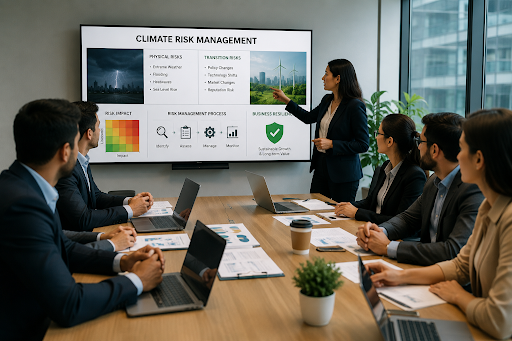
Climate-related challenges can affect business operations in unexpected ways, from supply chain and resource disruptions to changes in operating conditions and market requirements. Preparing for these possibilities gives organisations a stronger foundation for maintaining continuity and adapting to changing circumstances.
A structured approach to climate change risk management helps businesses identify vulnerable areas, assess potential impacts, and prioritise suitable responses. It also connects climate considerations with operational planning and long-term business decisions, creating a clear path toward stronger resilience.
Why Climate Risks Deserve a Place in Business Planning
Climate risk management connects environmental changes with practical business decisions. It involves looking at the conditions that could affect facilities, people, suppliers, resources, finances, and long-term plans. Businesses can consider these factors alongside existing operational and strategic priorities.
This approach can help management understand where disruption could occur and which areas require attention first. It also creates a basis for preparing responses that fit the organisation’s activities, locations, resources, and objectives.
The Business Areas Most Exposed to Climate Disruption
Climate-related disruption does not affect every business in the same way. A manufacturing facility may face heat, water, or energy pressures, while a company dependent on international logistics may be more exposed to transport interruptions. Understanding these differences helps businesses focus their resilience efforts where they can have the greatest practical value.
-
Physical Assets and Facilities
Buildings, equipment, warehouses, and production sites can be vulnerable to floods, storms, extreme heat, water shortages, and other environmental conditions. Reviewing the locations and functions of critical assets can help businesses identify potential weak points and consider suitable preparedness measures.
-
Supply Chains and Logistics
A business may depend on suppliers, ports, transport networks, utilities, and distribution partners operating in climate-sensitive locations. Mapping these connections can reveal dependencies that are easy to overlook. Businesses can then consider alternatives, contingency arrangements, and stronger communication with important suppliers.
-
Energy and Resource Availability
Climate pressures can affect access to energy and essential resources while also influencing operating costs. Reviewing consumption patterns and resource dependencies can help organisations identify areas where efficiency, diversification, or improved planning could strengthen resilience.
-
Financial and Operational Exposure
Disruptions can create additional costs through downtime, repairs, delayed deliveries, lost output, or changing resource prices. Assessing these potential consequences helps management understand which climate-related issues could most affect business performance and where investment in preparedness may be worthwhile.
-
Regulatory and Market Changes
Climate-related rules, reporting expectations, and market requirements can change the way organisations operate. Businesses that monitor these developments can prepare relevant processes and information in advance, reducing the pressure of responding at short notice.
Turning Climate Exposure Into Actionable Risk Priorities
Climate exposure can vary significantly across facilities, suppliers, resources, and business activities. A structured approach to climate change risk management helps organisations assess these vulnerabilities, understand their potential impact, and prioritise practical actions for stronger preparedness
Prioritisation can support practical decisions around resources, continuity planning, infrastructure, suppliers, and environmental initiatives. A focused approach also prevents climate planning from becoming a long list of concerns without clear ownership or action.
Using Climate Data to Strengthen Preparedness
Emissions data, energy use, resource consumption, operational records, and information about climate exposure can help organisations build a clearer picture of their current position. Regularly reviewing this information can also reveal changes that may require new priorities.
Independent validation and verification can add another layer of confidence where climate-related claims, projects, or emissions information need objective assessment. This is useful when organisations need credible evidence for stakeholders, reporting, regulatory requirements, or participation in relevant climate initiatives.
Building Practical Responses Before Disruption Occurs
Resilience planning becomes more useful when it moves from assessment to action. Businesses can develop response measures for vulnerable operations, establish responsibilities, strengthen contingency arrangements, and review alternatives for critical resources or suppliers.
Energy audits can also help organisations understand efficiency opportunities, while carbon neutrality initiatives and emissions-related assessments can support broader environmental planning. The most effective response fits the organisation’s exposure rather than relying on a standard plan for every situation.
Key Steps for a More Climate-Resilient Business
Building resilience requires more than recognising climate threats. Businesses need a practical approach that turns identified risks into clear priorities, planned actions, and regular monitoring. The following steps can help create a stronger foundation for climate preparedness.
- Map climate-sensitive locations, assets, and operations
- Identify critical suppliers and logistics dependencies
- Review energy and resource vulnerabilities
- Assess potential financial and operational consequences
- Monitor relevant regulatory and market developments
- Establish clear responsibilities for climate-related actions
- Use reliable environmental and emissions information
- Review resilience measures at planned intervals
These steps can help turn climate considerations into an organised business activity. Regular review is important because exposure, regulations, technologies, and operating conditions can change over time.
Keeping Resilience Plans Relevant as Risks Change
A resilience plan should evolve with the business. New facilities, suppliers, products, markets, technologies, and regulations can introduce different forms of exposure. Periodic reviews allow organisations to update priorities and determine whether existing response measures remain suitable.
Continual improvement also creates opportunities to learn from disruptions, exercises, audits, and performance results. This helps businesses strengthen preparedness gradually and proactively, rather than waiting for a major climate event to reveal weaknesses.
Choosing Climate Expertise That Fits Business Needs
External support can be valuable when organisations need specialised knowledge, independent assessment, or a broader view of climate-related requirements. Businesses should consider technical competence, relevant sector experience, assessment capabilities, and the range of services a provider offers.
It is also useful to consider whether the provider can support connected needs such as validation and verification, CBAM requirements, energy audits, and carbon neutrality. A suitable partner should understand the organisation’s objectives and provide services that complement its existing processes rather than adding unnecessary complexity.
Conclusion
Climate resilience grows when businesses identify their exposure, understand potential disruption, use dependable information, and prepare practical responses. A structured approach can help organisations connect climate considerations with continuity, resource planning, compliance, and long-term decision-making.
Those who are looking for reliable climate change management services can turn to KBS Certification Services Ltd. for support across areas such as validation and verification, CBAM, energy audits, and carbon neutrality. With experience in climate and sustainability projects, KBS helps organisations address environmental requirements through structured assessment and verification.


