

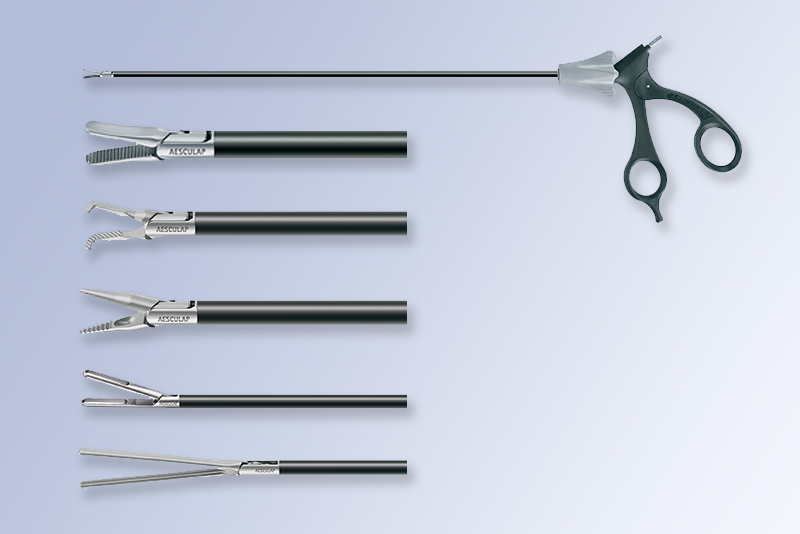
Laparoscopic procedures depend on controlled access, clear visualization, and instruments designed for work through small operative ports. The right laparoscopic instruments allow surgeons to grasp, dissect, cut, clip, manipulate, and retrieve tissue while maintaining precise control within a confined surgical field.
Instrument selection can influence handling, procedural efficiency, and the surgeon’s ability to perform specific operative tasks. Hospitals, surgical centers, and procurement teams therefore need to consider construction, functionality, compatibility, sterilization requirements, and intended clinical application before adding instruments to an operating room inventory.
Core Instruments Used in Laparoscopic Procedures
Laparoscopic procedures use specialized tools that translate familiar surgical functions into long, narrow instruments suitable for minimally invasive access. Common categories include graspers, dissectors, scissors, needle holders, clip applicators, suction devices, and trocars. Each serves a defined purpose during different stages of an operation.
The appropriate combination depends on the procedure, tissue characteristics, access technique, and surgeon preference. A well-planned instrument set can support organized workflow while reducing unnecessary exchanges during surgery. Procurement teams should evaluate the complete procedural requirement instead of selecting individual tools solely by appearance or price.
Essential Instrument Categories for Surgical Work
Several instrument groups form the foundation of a laparoscopic setup. Their functions range from establishing access to manipulating tissue and completing closure, making compatibility between components an important consideration for operating teams.
- Trocars: Establish access ports through which other instruments and visualization equipment can be introduced.
- Graspers: Hold, retract, and manipulate tissue with varying jaw configurations suited to different applications.
- Dissectors: Assist with separating tissue planes and performing controlled blunt or sharp dissection.
- Scissors: Provide cutting capability for tissue, sutures, or other operative materials.
- Needle holders: Facilitate intracorporeal suturing by securely controlling the needle during knotting and closure.
- Clip applicators: Apply clips for selected vessel or duct control when appropriate to the procedure.
- Suction and irrigation devices: Help clear fluid, blood, or debris and maintain an operative field suitable for visualization.
Instrument Design and Functional Considerations
The physical design of an instrument affects how effectively it can perform its intended function. Shaft length, jaw configuration, handle design, articulation, tip profile, and rotational control can all influence maneuverability within the abdominal cavity. Surgeons may require different designs depending on the procedure and anatomical location.
Material selection also matters because reusable surgical tools must withstand repeated cleaning and sterilization cycles when designed for that purpose. Stainless steel construction, controlled machining, polishing, and passivation can contribute to surface quality and corrosion resistance. Procurement teams should also assess alignment, grip, finish, and mechanical movement before purchasing larger quantities.
Graspers and Tissue Handling
Graspers are selected according to the tissue being manipulated and the level of control required. Atraumatic designs may be appropriate for delicate tissue handling, while other jaw patterns can provide firmer control when stronger traction is necessary. Careful selection helps align the instrument with its intended operative function.
Scissors and Cutting Functions
Laparoscopic scissors provide controlled cutting through a narrow access channel. Straight, curved, and specialized jaw configurations can support different procedural requirements. Sharp cutting components should be handled under direct visualization, while maintenance of proper alignment and blade performance is important for consistent operation.
Needle Holders and Suturing
Needle holders provide controlled needle manipulation during laparoscopic suturing. Jaw geometry, locking characteristics, shaft length, and handle ergonomics can affect needle control and wrist movement. A suitable design allows the surgeon to position, pass, and retrieve the needle while maintaining stability within the operative field.
Access, Visualization, and Operative Control
Instrument performance cannot be considered separately from the systems that provide surgical access and visualization. Trocars create working channels, while laparoscopes and camera systems provide the visual information needed to guide instrument movement. Carbon dioxide insufflation is also commonly used to establish and maintain pneumoperitoneum during abdominal procedures.
A coordinated setup allows different tools to work through designated ports without unnecessary interference. Port diameter, instrument size, viewing angle, and working length should therefore be considered together. For specialized procedures, the required configuration can vary substantially, so standardized assumptions may not suit every operating room.
Factors for Selecting a Reliable Instrument Set
Procurement decisions should consider more than the number of pieces included in a set. Hospitals need instruments that correspond with actual procedures, staff preferences, sterilization processes, and expected utilization. Standardization can simplify inventory management, while appropriate variation ensures that surgeons have access to tools suited to different operative tasks.
Key considerations include:
- Intended procedure: The instrument should correspond with the specific surgical application.
- Jaw configuration: Tip geometry should match the required grasping, dissecting, cutting, or suturing function.
- Ergonomics: Handle construction and rotational control can affect comfort and maneuverability.
- Material quality: Stainless steel and controlled finishing can support durability and corrosion resistance.
- Sterilization readiness: Reusable instruments should be suitable for the facility’s established sterilization process.
- Quality consistency: Repeatable manufacturing standards are important when purchasing sets or replenishing inventory.
- Packaging: Secure packaging and appropriate documentation can support storage, distribution, and procurement operations.
Maintaining Performance Through Proper Care
Even well-manufactured surgical tools require appropriate handling throughout their service life. Cleaning should follow the applicable institutional protocols and manufacturer instructions, with particular attention to joints, shafts, channels, and working ends. Residual biological material can interfere with mechanical movement and compromise instrument condition.
Inspection before use can identify problems such as misalignment, damaged jaws, impaired cutting edges, corrosion, or restricted movement. Instruments showing functional deterioration should be removed from service according to facility procedures. Proper handling, cleaning, sterilization, inspection, and storage collectively support dependable operating room readiness.
Final Thoughts
Could better instrument selection strengthen operating room preparedness while supporting precise laparoscopic procedures? Laparoscopic surgical instruments should be evaluated according to function, construction, compatibility, sterilization requirements, and expected clinical use rather than price alone. Salwan Surgicare has manufactured and supplied surgical instruments since 1997, offering more than 38,000 instruments across multiple specialties. Its stated capabilities include stainless steel manufacturing, controlled machining, polishing and passivation, reusable sterilization-ready designs, export-friendly packaging, quality checks, and support for hospitals, distributors, and procurement teams. The company also states that its manufacturing processes carry ISO 13485:2016, ISO 9001:2015, and CE certifications, with a one-year product guarantee.


