


Housing costs are prohibitively high at the moment. No argument needed, no debate necessary; everyone from your best friend to your Aunt Linda who “tried to buy a fixer-upper last year” can tell you that much. That’s why so many people are looking to an ADU for sale or a tiny home kit rather than the traditional real-estate route. Countless people have grown tired of the standard market, and have subsequently turned their efforts toward creating an accessory dwelling unit or constructing a new, compact living space. It’s the combination of a growing demand and an available supply, rather than a hot “new thing.”
So, What Exactly is an ADU, Anyway?
Chances are, you’ve heard the term already; if you haven’t, then you’re in for a treat. An Accessory Dwelling Unit (or ADU) is exactly what it sounds like: a small, self-contained living space that is built on the same lot as the main residence. It could be a backyard cottage, an apartment built into an existing outbuilding, or a manufactured home that is attached to the primary structure. In short, it’s a way to create legal, additional housing on the same parcel of land. Many places have made building an ADU much easier by relaxing or removing restrictions, partially because they’re an excellent way to combat the national housing crisis.
Tiny Home Kits are Not What They Used to Be
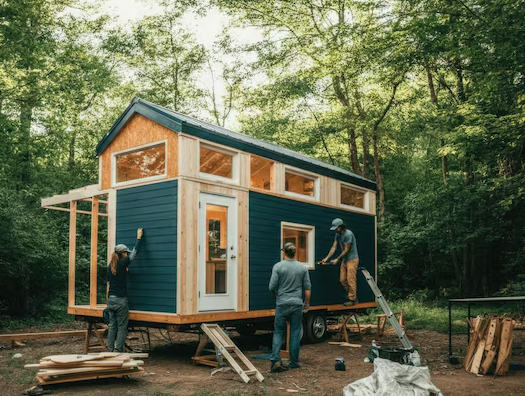
Many people dismiss tiny homes as an impractical novelty, but those days are firmly in the rearview mirror. Modern tiny home kits, unlike those from a decade ago, come equipped with all the features of a traditional stick-built home. From proper insulation and rough plumbing to frame construction, these kits can provide just about everything you need to finish your project. Essentially, they are a condensed version of a standard building package, minus the guesswork or hassle of designing and planning one yourself.
Why Pre-Built or Kit-Based Living Spaces are Worth Your Time and Money
Let’s get down to brass tacks, shall we? Why spend the money and effort, however minuscule, to build an ADU or purchase a tiny home kit over a traditional building method? Well, let’s start with the financial reasons. Traditional construction has become prohibitively expensive and slow in the wake of a nationwide shortage of qualified labor. An ADU for sale or a tiny home kit bypasses many of the roadblocks that would slow construction, not to mention cutting costs by a substantial if variable amount. The same goes for construction time; while permits and other factors can prolong the process, you’ll still find that building from a kit or purchasing an ADU for sale is much faster and easier than going through the standard hiring process. It’s not foolproof, but it eliminates a considerable number of potential headaches.
The Truth About the Budget: What You Need to Know
Unfortunately, there’s no skirting around it: an ADU for sale comes with a price. A very nice one, if you ask around. Many sellers advertise starting prices for their ADUs at something like $30,000″ without mentioning site prep, utility hookups, permits, foundation work, and delivery. Those add up fast. A realistic all-in budget for a quality ADU or tiny home kit setup usually lands somewhere between $60,000 and $150,000, depending on size, materials, and local costs. That’s a big number, but bear in mind that most will be significantly cheaper and faster to construct than a standard custom build. In the same vein, most tiny home kits will have a much lower base cost and include all the essential materials, whereas an ADU build will usually have a higher base price, but include some interior finishing as well.
The Customization Options You Didn’t Know You Had
When most people think of tiny homes or ADUs for sale, they think of basic, minimally equipped structures. While some builders do specialize in that sort of thing, most provide extensive customization options for those who want them. This can include square footage options, window placement and size, lofted or single-level layouts, and even exterior finishes that will complement the rest of your home. It’s all very exciting, really! You can design the perfect little retreat to suit almost any need; after all, you are committing to putting this structure on your land for the next thirty years, or so!
Zoning and Permits: The Dirty Secret of Tiny Home Living
Unfortunately, while many municipalities have taken steps to ease the process, the truth is most places still make getting the required permits for a tiny home or an ADU for sale unbearably difficult. Zoning laws, restrictions on square footage, and requirements for separate utilities all add up, sometimes negating whatever legislative action has been taken at the state level. If you have any questions or concerns about permits or local restrictions, ask your jurisdiction directly. In many areas, especially in California, Oregon, and Texas, legislative changes have made building an ADU much easier on a local level. However, just because it’s easier in some places doesn’t mean it’s easier everywhere.
So, Who Actually Buys into This Tiny Home Living Thing?
It may surprise you to know just how many different types of people buy either an ADU or a tiny home. There are elderly people looking to put their children or parents within easier reach, landlords who want to rent out an additional space, remote workers who need a more private office, and young people who can’t afford a down payment on a traditional house. Everyone has their own reasons, but they all share the same solution: an ADU for sale, a tiny home kit, or even a fully-prebuilt tiny home.
What You Should Know Before Buying an ADU or Tiny Home Kit
When it comes to buying an ADU, not all builders are created equal. The same goes for tiny home kits. Ask yourself a few crucial questions before purchasing a kit or hiring a builder to construct an ADU for sale on your land. Is the company that made the tiny home using quality materials? Does the builder have any experience with ADU construction, or is this their first time? Do they deliver or install the tiny home as well? Ask around if you can, and make sure you understand the limitations of your purchase. A legitimate company should have positive feedback from satisfied customers who can attest to the builder’s professionalism, quality of work, and adherence to their published standards. After all, a little research never hurt anyone.
Trailer Made Custom Trailers Know What You Need to Know
At this point, you’ve probably done enough research to know what you want and need in a tiny home or an ADU for sale. That’s great! This is where Trailer Made Custom Trailers can help. They understand the intricacies of both the construction and logistical aspects of an ADU or tiny home build, and can help you get past some of the usual roadblocks. You won’t have to research and plan everything yourself, as many other companies require; instead, Trailer Made Custom Trailers will help you do what they do best, saving you both time and hassle. It’s an invaluable experience that you won’t get anywhere else.
FAQS
Is an ADU for sale cheaper than standard home additions?
In most cases, an ADU will have lower labor costs than a standard addition. Most additions also require structural reinforcement work, which can add substantially to the cost.
Do I need a permit for a tiny home kit?
As a general rule of thumb, yes. Even if the tiny home kit is built on your land, most municipalities will require permits for any electrical, plumbing, or foundational work.
Can I rent out an ADU?
Renting out an ADU is an excellent way to offset the costs of construction, and is legal in most places. As always, check with your local government to ensure that renting is an option in your area.
How long does it take to set up a tiny home kit?
Most setups only take a few weeks to a few months, depending on the size and preparation work needed.
What is the difference between an ADU and a tiny home kit?
While the two are often used interchangeably, an ADU refers to any kind of secondary dwelling, while a tiny home kit refers specifically to a prefabricated tiny home. In short, they usually overlap, but aren’t necessarily the same thing.


