


Many people chase growth through books, courses, and endless self-work, yet still feel on edge inside. Creating Inner Safety means building a steady sense that your body and mind can settle without constant threat. It is the quiet base that lets real change stick instead of sliding away the moment life gets loud. Without it, growth stays mostly in the head and rarely reaches the rest of you.
A lot of us treat personal growth like a checklist. Read the right books, sit through workshops, name every pattern, and somehow peace is supposed to show up. It rarely does that cleanly. You can understand your triggers perfectly and still walk around with tight shoulders, a racing mind, or that low hum of unease that never fully leaves. The body keeps its own score. Until it registers that it is okay to drop the guard, the mind keeps looping the same old alerts. Creating Inner Safety is the part most growth paths skip or treat as optional. It is not.
Why Creating Inner Safety Matters More Than Another Technique
Growth work often focuses on insight. You dig into childhood stories, map your defense patterns, practice better boundaries. All useful. But insight alone does not convince the nervous system to stand down. The body still braces for the next hit even when the head knows better. That mismatch is why so many people feel like they have done the work and still cannot relax. Creating Inner Safety addresses the gap directly. It teaches the body, through repeated small experiences, that the present moment is not an emergency. Once that lands, the rest of the growth tools start to land too.
Think about it. When you feel unsafe at a basic level, attention scatters. You scan for problems, replay old conversations, plan escapes that never get used. Focus becomes thin. Self-awareness turns into self-criticism. You notice every flaw and miss the quieter signals that actually help. Creating Inner Safety flips that. The body softens a little. Attention gathers. You start catching yourself mid-loop instead of hours later. From there the same old practices—journaling, meditation, honest conversations—work differently. They stop feeling like chores and start feeling like contact with something real.
The Body as the First Place Safety Has to Land
Most of us live from the neck up when we talk about growth. We analyze, reframe, affirm. The body gets treated as an afterthought or a problem to manage. Tension in the jaw, shallow breathing, that constant readiness in the gut—these are not just physical. They are the ongoing message that safety is not yet here. Creating Inner Safety begins by listening to those signals instead of overriding them. You notice the held breath and let it go a little. You feel the weight of your feet on the floor and stay with it longer than usual. Small, almost boring moves. They add up.
Over time the body starts to trust that it can stay present without bracing. That trust is not dramatic. It is quieter energy, clearer sensing, less need to check every exit. Personal growth that ignores this stays fragile. One hard week and the old armor snaps back on. When the body has its own sense of safety, setbacks still sting but they do not erase the ground you have built.
How Everyday Moments Build or Break That Safety
You do not need a special room or perfect conditions. Creating Inner Safety happens in the ordinary places most people overlook. The way you speak to yourself when you make a mistake. Whether you allow a pause before answering a hard question. How you sit with mild discomfort instead of reaching for the phone. Each choice either reinforces the old story that you must stay guarded or offers a small counter-example.
It is not about forcing calm. Forced calm is just another form of control, and the body knows the difference. Real safety grows when you stay curious about what is already happening. Notice the tightness without needing it to vanish. Feel the breath without improving it. These moments teach the system that intensity does not always mean danger. Slowly the baseline shifts. You still get activated, still get tired, still feel the full range. But the emergency setting is no longer the default.
The Link Between Safety and Honest Self-Contact
Growth requires contact with parts of yourself you would rather skip. Old grief, sharp anger, quiet shame. If the body does not feel safe enough to stay, those parts stay locked away or explode sideways. Creating Inner Safety makes room for them without the drama of forcing a breakthrough. You learn you can feel something strong and still remain. The feeling moves through instead of taking over. That is different from spiritual bypassing or endless analysis. It is a simple presence with what is already here.
People who skip this step often stay busy collecting insights while the deeper material stays untouched. They know their patterns by name but cannot sit with the actual sensation. Creating Inner Safety changes the capacity. You become able to be with yourself more fully. From that fuller contact, change happens with less force. It feels less like fixing and more like remembering something that was always possible.

When Safety Is Missing, Growth Stays Surface-Level
Without a foundation of safety, personal growth can turn into another performance. You meditate to prove you are calm. You journal to prove you are self-aware. You set boundaries to prove you are strong. The underlying nervous system still runs the show. Old strategies keep running in the background. Creating Inner Safety interrupts that cycle. It is not another technique to master. It is the condition that lets techniques actually matter.
Many people notice this after years of solid effort. They have tools, language, awareness—and still feel distant from themselves. The missing piece is rarely more knowledge. It is the felt sense that it is okay to be here, in this body, with whatever is present. Once that starts to form, the same tools produce different results. Conversations go deeper. Decisions come with less second-guessing. Rest actually restores.
Building the Habit of Returning
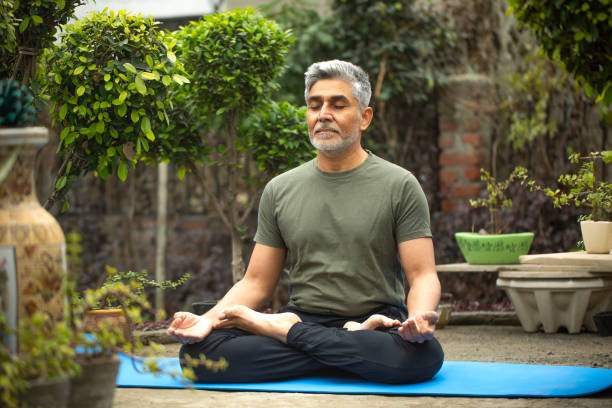
Creating Inner Safety is not a one-time achievement. It is a repeated return. You leave it, life pulls you out, you notice, you come back. Breath is often the simplest door. Not the perfect breath. Just the one that is already moving. Attention follows. The body registers the return. Over weeks and months the returns get shorter. The gap between leaving and noticing shrinks. That is the real practice.
It will feel awkward at first. Some days it will feel pointless. That is normal. The body does not rewrite its threat map overnight. Consistency matters more than intensity. Five honest minutes of staying with sensation outweighs an hour of forced serenity. Creating Inner Safety grows through ordinary reliability, not peak experiences.
What Changes When Safety Becomes Familiar
Once the body starts to trust that it can settle, daily life rearranges itself. You still face pressure, still make mistakes, still meet people who push your edges. The difference is the baseline. You recover faster. You notice earlier when you are leaving yourself. You have more room to choose instead of reacting on autopilot. Growth stops feeling like a constant climb and starts feeling like a place you can actually live from.
Relationships shift too. When you are less braced, you hear others more clearly. You need less from them to feel okay. Boundaries become cleaner because they come from a steadier center rather than from fear. Creativity opens. Decision-making gets quieter. None of this is magic. It is the natural result of a nervous system that is no longer running constant background threats.
Conclusion
Feeling Safe is not an optional extra on the growth path. It is the ground everything else stands on. Creating Inner Safety turns the body from a place of ongoing vigilance into a place that can actually rest and notice. From that rest, awareness deepens, patterns soften, and the work you have already done finally has somewhere solid to land. The practice is simple and often imperfect. Return to the breath, stay with what is here, let the body learn it does not have to stay on high alert just to exist. That quiet foundation changes more than any single insight ever could.


